Identity & Self
Selfhood, and who gets to define either.
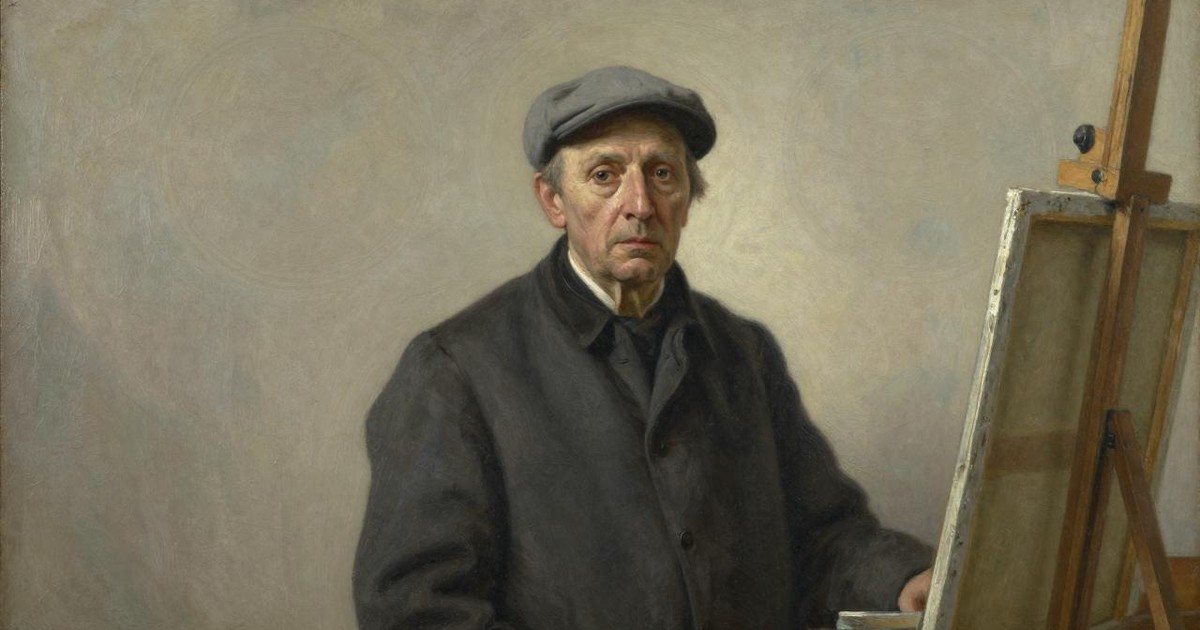
The question of who you are sounds like it should be the easiest one in philosophy. You have inside access. Nobody else has ever had a better seat. And yet the question has generated some of the strangest and most persistent arguments in the history of thought, because the inside access turns out to be part of the problem: you cannot get far enough away from yourself to check the reading.
The old treatments converge on one insight from different directions. The Ship of Theseus asks what survives when every plank is replaced, and the digital-age version intensifies the puzzle, because reinvention used to take a pilgrimage and now takes an afternoon. Locke tied personal identity to memory and consciousness rather than substance, which raised the follow-up questions we are still arguing about. Hume looked inward for the self and reported finding only a bundle of perceptions, never the thing doing the perceiving. Buddhist philosophy arrived at a similar place from an entirely separate tradition: the self that feels solid is a process posing as an object. Kant put the observing self permanently out of reach, a transcendental position that cannot appear among the things it observes.
Those arguments were not settled. They were stocked, waiting for conditions that would make them urgent. The present supplies the conditions. Identity is now something performed, curated, A/B tested, and archived. The self that Hume couldn't find is now split across profiles, each one tuned to its audience, each one generating feedback that shapes the next version of the presentation. Butler's account of performativity was written about gender and generalizes uncomfortably well: the self is not a pre-existing thing you express but an ongoing accomplishment you keep performing, with real penalties for breaking character. The command to just be yourself presumes a self that exists prior to the performance. That presumption is precisely what the arguments in this topic put under load.
There is a political half to this question that pure introspection misses, and Fanon is the reason this topic carries his work. Identity is not only made from the inside; it is made under the eyes of others, and the eyes are not evenly distributed. The colonized subject is constituted by a gaze that precedes them, that decides what they are before they get a word in. That is not a variant of the identity question; it is the identity question with the power dimension restored to it. Any account of selfhood that ignores who controls the mirror is an account of a self that only some people get to have.

This topic page collects the essays on the site where the self is the engine rather than the assumed background. The methods vary by column. A Then & Now piece pairs an old treatment of identity with the present conditions that test it. The Objection steelmans a claim about the self, the authenticity command for instance, and then runs the counter. Deep Cuts follow the question at the length it needs. Reviews enter this topic when the work under review is itself an argument about selfhood, a dystopia built on the question of who owns the definition of a person.
There is a failure mode in identity writing that deserves explicit naming here, because the internet has made it the default. The brand version: the self as a curated asset, an identity portfolio to be managed and maximized, with the performance confused for the thing. The essays here try to keep the distinction between the self and its presentation from collapsing, without pretending the presentation is disposable. The curated self is a real thing people live inside. It is also not the same thing as the person living there.
The opposite failure is the essentialist version: there is a true self underneath all the noise, and the job is to excavate it. This is the claim the manosphere trades in, that there are natural roles and natures, and it is also the claim Wollstonecraft dismantled in 1792 without benefit of a sociology degree. Her rebuttal still lands, which is why she appears on this site arguing against the eighteenth-century version of an argument that currently funds a content industry. The essays here take seriously the possibility that there is no underneath, while refusing to conclude that anything goes.
The overlaps are dense because the self shows up everywhere. Meaning & Mortality, whenever the question is whether the project of being someone can survive its ending. Power & Politics, because Fanon's line of work shows the gaze is an instrument of power before it is a fact of psychology. Science & Technology, because the quantified self volunteers the measurements that a previous century of states had to compel. Religion & the Sacred, because the soul was the original answer to this question and the secular versions still carry its grammar. The crossings are not digressions; they are the question spreading out into every department it actually occupies.
The archive below is where this stands now, five essays toward a target of nine. The spread covers the puzzle of persistence, the performed self, the political gaze, the engineered number, and the fiction that stages all of it at once. The question does not retire, and neither does the pressure on it.
In this topic:
The Ship That Was Never the Same Twice — identity puzzles and digital reinvention
Just Be Yourself — Butler's performativity and the self with nothing behind it
The Gaze That Colonizes — Fanon on identity formed under the eyes of others
The Numbered Self — Zamyatin's We and the quantified life
Never Let Me Go — Kazuo Ishiguro, through the lens of bioethics and what a life is owed