Just Be Yourself
The injunction to authenticity hides the fact that there is no self behind the performance. Butler proved this twenty years before social media made it unavoidable.
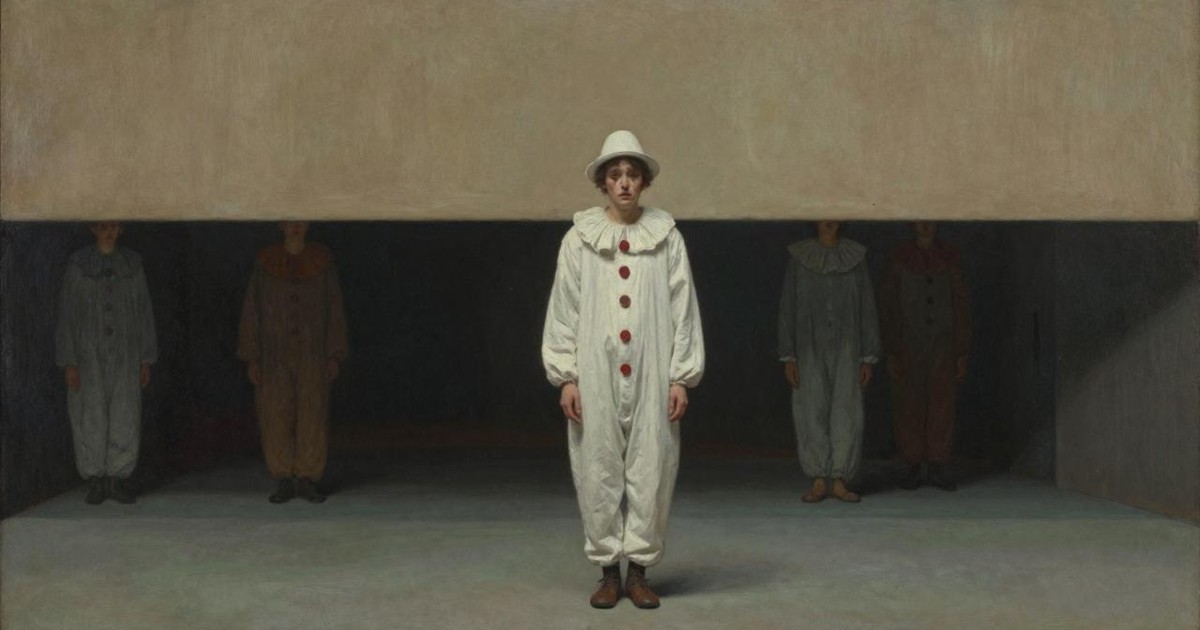
In 1990, a philosopher published a book arguing that gender is not something you have but something you do, and the academy barely noticed for three years. By 1993, the book had become unavoidable in gender studies programs, and within a decade, the argument had migrated into popular discourse, where it was quoted incorrectly, weaponized, celebrated, and dismissed, depending on which argument the quote was serving. The book was Gender Trouble, and its author was Judith Butler.
Butler's thesis, distilled to the sentence everyone wanted to attack and nobody wanted to understand, runs like this: gender is performative. Not theatrical, not acted, not chosen freely from a menu of identities. Performativity is a philosophical term from speech-act theory, and it describes language that does things rather than describing them. Saying "I pronounce you married" performs marriage; it does not report one. Saying "it's a girl" at birth is not a neutral observation. It initiates a chain of citations, expectations, norms, that will shape the child's entire life. Gender, on Butler's account, is the repeated citation of norms across time, until the repetition itself creates the illusion of a stable interior self that the performance expresses.
There is no gender core inside that gets expressed outward. There is only the outward performance, repeated until it settles into something that feels like depth. The person does not perform gender because they have a gender inside. They have what feels like an inside gender because they have performed gender repeatedly enough to create sediment. That is the trouble the title refers to: destabilizing the category by showing it is a practice, not a discovery, and opening the possibility that different practices would produce different genders entirely, not just rearrange the furniture in an existing room.
Butler did not write for general audiences. The prose is dense, deliberately so, because it was engaging with Hegel, Foucault, Freud, Lacan, and Derrida simultaneously, and any simplification would have collapsed the argument. The consequence was that Gender Trouble was almost immediately misread. Critics accused Butler of claiming gender is a choice, that performers can simply change costumes whenever they please, that the theory erases biological reality. Butler's response was to clarify that performativity is not voluntarism. You do not choose to perform. You cite norms you inherited before you could speak, under pressure from every institution around you, and the citation that passes for your selfhood is the only one available to you.
The book became foundational for queer theory and transgender studies, even as Butler herself grew frustrated with how her work was being deployed. She spent the next two decades clarifying, revising, pushing further. The follow-up, Bodies That Matter (1993), addressed the criticism that she had treated bodies as insubstantial. She clarified that bodies do matter materially, that they suffer real violence and pleasure and constraint, but the meaning they carry is always already a product of the citational practices that precede them. The body is real. What counts as intelligible about the body is regulated.
Part II: The citation machine
The mechanism at the center of the argument deserves slower attention, because it is what makes the theory portable beyond gender specifically.
Performativity begins with repetition. Every time a norm is invoked, cited, reproduced, it gains the appearance of solidity. A gesture, a posture, a pronoun, a haircut, a manner of walking through a room. Each instance on its own looks trivial, arbitrary, negotiable. But repetition compounds, and the compound forms a pattern that is recognized by others as legible, which means it is enforced, and the enforcement makes it harder to deviate, which increases the repetition. The loop closes: the norm persists because people repeat it, and people repeat it because it persists and punishes deviation.
The second mechanism is exclusion. For any category to feel natural, something must be outside it, something that counts as unintelligible, a failure, a mistake. Butler's sharper insight was that the heterosexual subject is not prior to heterosexuality. It is produced through the repeated exclusion of the homosexual, the bisexual, the gender-nonconforming. Those categories are not exceptions to a prior rule. They are the outside that makes the inside feel like a boundary rather than a spectrum. The system requires abject subjects to maintain its coherence. The person who cannot be placed in the grid is necessary to the grid's stability.
Third, agency enters not as freedom but as the capacity to cite differently within the constraints of citation. You cannot stop citing norms. Language itself is a pre-existing structure. But you can mis-cite, recombine, exaggerate, subvert, and in doing so, you expose the mechanism. Drag, in Butler's reading, is not imitation of some prior gender. It is the exposure of gender's imitational structure, revealing that all gender is imitation of an ideal that does not exist anywhere except as a demand. The drag performer does not reveal the real gender behind the costume. They reveal that there is no gender behind the original costume either.
This is where the theory met resistance and became weaponized. If gender has no essential core, then what anchors moral claims about identity? If the self is a citation, what grounds the claim to dignity? Butler's answer, consistent throughout, was that the lack of essence does not mean lack of reality. Performances cause real effects on real bodies. The norm's enforcement kills people. The violence is real even if the justification is a citation. Agency is possible not because we escape norms but because we inhabit them differently, and those different inhabitations accumulate, shift the overton window, change what counts as intelligible.
The question that emerges from all this is whether Butler intended to describe liberation or to describe constraint. Both, she argued. You cannot step outside the citational regime. But you can expose it, disrupt it, and in exposing it, you create new possibilities for citation that were not available before. The work is never finished. The norm never achieves finality. It requires constant maintenance. Maintenance is where the crack is.
Part III: The feed that audits performance
Now apply the machinery to the contemporary self, where the performance has been industrialized.
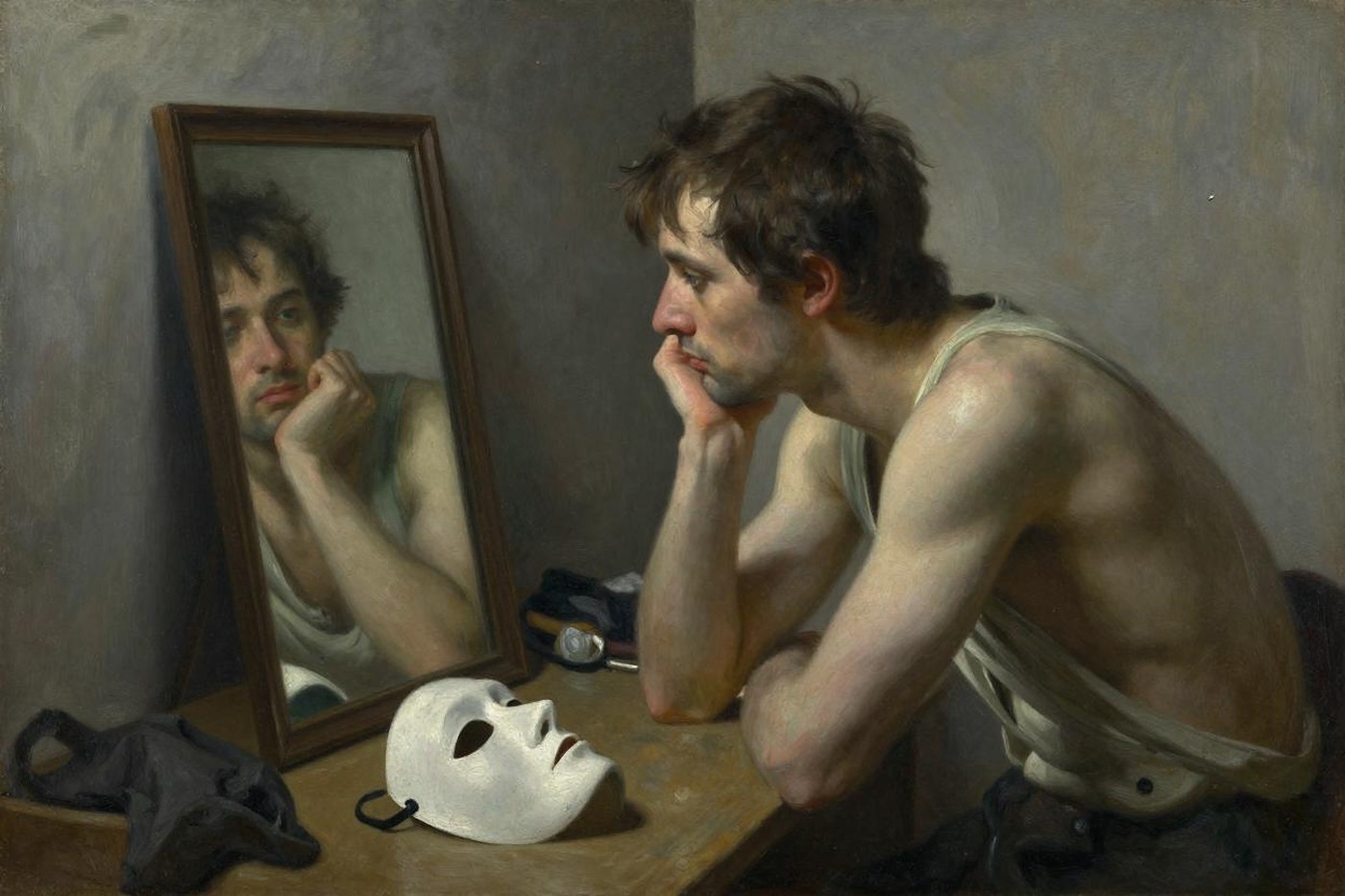
Start with the observation that seems obvious until you say it aloud. Social media has made identity publicly auditable. Where Butler described private performances reinforced by family, school, religion, and local community, the contemporary subject has their citations logged, indexed, ranked, and compared against millions of other performances in real time. The Instagram profile is not a diary. It is a resume of selfhood, curated, edited, optimized for recognition by algorithms whose engagement metrics function as approval ratings.
The citation loop has accelerated. A person posts a photograph, receives thirty likes, removes the photograph, posts a different version, receives one hundred likes, remembers the lesson: this pose, this lighting, this caption length works. The next day, the pattern repeats. Within months, the performance has converged toward the statistically optimal self-image, and the convergence is not experienced as coercion because it feels like discovery, like learning who you actually are when people see you. The algorithm has not told the person to perform differently. The algorithm has revealed what works, and the person has internalized the revelation as self-knowledge. That is the trick. The norm cites itself, and the subject experiences the citation as authenticity.
The result is not that everyone becomes the same. The system rewards differentiation. But differentiated within narrow bounds, recognizable as a niche, a brand, a subcategory. The person who performs "honest vulnerability" finds a segment of audience hungry for that performance. The person who performs "unapologetic ambition" finds theirs. The algorithm distributes the niches, and the niches distribute the performance templates, and the templates become the available selves. You do not discover yourself. You select a template and refine it, and the refinement feels like depth because the refinement takes years and produces real memories and real relationships built around the performance.
This is where the old Butler framework meets the new problem. The subject now knows they are performing. The awareness is widespread, sometimes explicit. Influencers confess they curate their lives. Users joke that the feed is a highlight reel. Everyone admits the artifice, and admits they are participating, and the admission functions as absolution. I know it's performative, therefore it doesn't count as deception. The citation is exposed, therefore the mechanism is disabled. But it is not disabled. Exposure has become part of the performance. The humblebrag about the humblebrag, the apology for the posturing that precedes the posturing, the self-aware confession that precedes the calculated disclosure. The performance performs its own awareness of itself, which is a more sophisticated performance, not a different one.
And the stakes have risen. Before the feed, the performance was locally enforced. Deviations were punished by your neighbors, your family, your church. The consequences were real but finite. Now the performance is globally auditable, and the consequences travel faster and farther. A misstep spreads, is archived, is retrieved years later, and attaches to the person permanently. The citational regime has added permanence to the feedback loop. The person who once learned to adjust their performance in a living room now learns to adjust in view of millions, and the adjustment becomes internalized at a younger age.
The question Butler would ask is whether this awareness changes anything. Does knowing you are performing liberate you from performance? Or does it simply make the performance more fluent, more convincing, because the self-conscious layer adds polish without stopping the engine? In Gender Trouble, Butler insisted that drag does not liberate us from gender. It reveals that all gender is drag. The revelation is not a solution. It is the starting point for political work, and the work is to make new citations intelligible. The contemporary equivalent would be: knowing the feed is performative does not free you from the feed. It makes the question narrower and harder: what citations do you want to make legible, and what costs are you willing to pay to make them?
Part IV: The counter-intention of authenticity
The objection to Butler's theory lands hardest here, where it meets ordinary experience.
People report feeling trapped by their online performances, exhausted by the maintenance, and yet they cannot stop. The most common testimony from social media users, in qualitative studies and casual conversation alike, is that the platforms feel coercive despite being opt-in. No one forced the phone onto the wrist. No one mandated posting the vacation, the meal, the achievement, the grief. Yet the absence of the post registers as absence itself, as if the experience did not happen unless documented. The performance has colonized the lived moment, and the colonization is voluntary, which makes it resistant to traditional critique.
Add the counter-position: perhaps performance is simply how human beings have always constituted selves. Goffman's dramaturgy in 1959 described social life as impression management, decades before screens existed. People dressed for occasions, rehearsed speeches, managed their tone, hid their weaknesses in front of strangers, and the difference between then and now is the scale and persistence of the record, not the fact of performance itself. On this reading, Butler is not discovering new constraints but describing old ones with sharper terminology. The self has never existed outside social recognition. The feed has not created this condition. It has made it visible, and the visibility is disturbing, but the disturbance is new, not the structure.
And there is the genuine liberation that Butler's framework enables. Transgender people, gender-nonconforming people, anyone whose performance did not match their assigned category, have used the theory to name the constraint and to justify the transition. If gender is citation, then different citation is not falsification. It is expansion. The person who changes their pronouns is not lying. They are updating the citations that govern their legibility. The body remains real. The suffering remains real. The harm inflicted by misrecognition remains real. But the path forward opens because the destination is not a hidden truth waiting to be uncovered. It is a new configuration of citations that others must learn to read.
The question that survives the debate is narrower than the theory. How much performance can a human sustain before it stops being a performance and becomes the self? At what point does the citation produce the interior it purports to express? The feed's user knows they are curating. They also know they have grown into the curated image, that the poses have changed their posture, that the captions have changed their language, that the audience's expectation has changed their behavior. The line between performance and person blurs, and the blur is not accidental. It is the goal. The person who has successfully integrated their public and private selves is not someone who stopped performing. It is someone whose performance has become invisible to themselves, and that invisibility is not truth. It is fluency.
So here is the unfinished question, offered without resolution. When you tell someone to just be themselves, what do you mean? Are you asking them to stop performing? Or are you asking them to perform more authentically, which is to say, more convincingly, a better version of the performance that will satisfy the same norms you're already enforcing? The injunction assumes the self is already there, waiting underneath, intact, untouched by the citations that have shaped it from childhood. Butler argues there is nothing underneath. The self is the performance, and the performance is the history of everything that was demanded, allowed, punished, and rewarded, written onto a body that will remember it long after the instructions stop.
Be yourself is the trap disguised as liberation. The question is whether you can rewrite the instructions while the play continues, and whether rewriting counts as the same play or something else entirely.
Your feed is waiting. The next post is yours. Decide what it says about you, knowing it will decide what you become.
Related topic: Identity & Self.
Further Reading