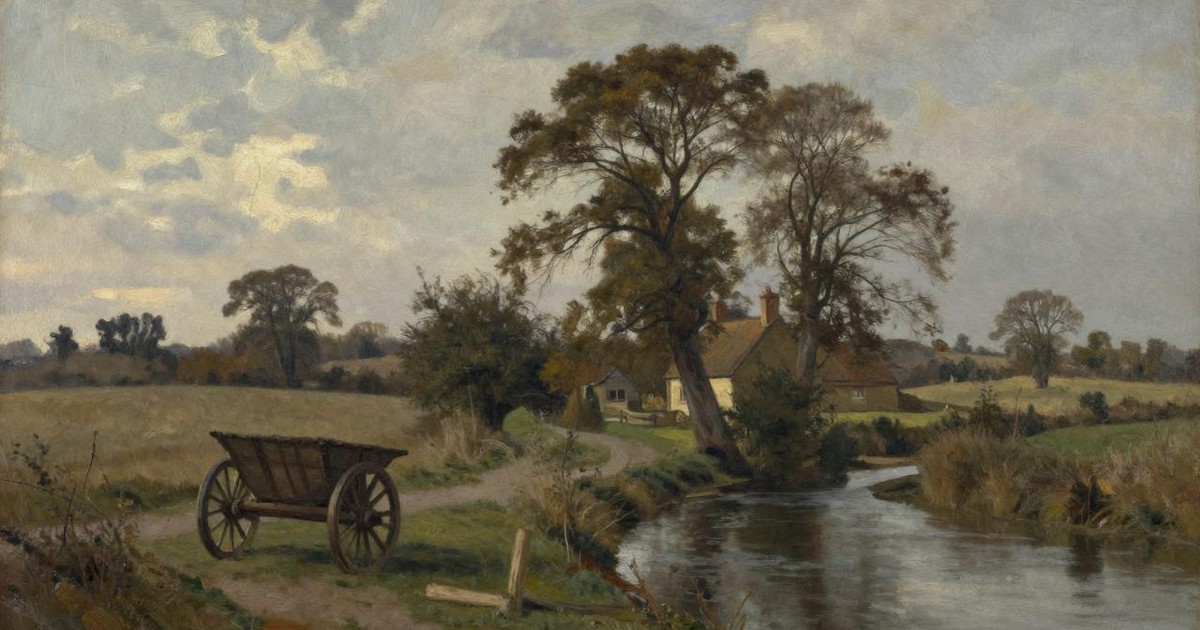
Kazuo Ishiguro withholds the word "clone" from Never Let Me Go for most of its length, and that withholding is the whole method. Kathy H. narrates from a vantage point where everything she's about to tell you is already understood by the world she lives in, so she never explains it to you the way a science fiction writer normally would, front-loading the premise before the plot starts. Instead you get Hailsham, an English boarding school rendered with the exact textures of a normal English boarding school — students, "guardians" instead of teachers, art competitions, gossip, crushes, a mysterious woman called Madame who collects the best student artwork for a "Gallery" no one can explain. The novel lets you settle into that pastoral familiarity for dozens of pages before the vocabulary starts to curdle: "donations," "carers," "completing." By the time the full shape of what Hailsham is training its students for becomes explicit, you've already spent enough time inside Kathy's ordinary interior life — her friendships, her jealousies, her retrospective tenderness toward people she loved imperfectly — that the horror doesn't arrive as a twist. It arrives as something you already knew and had been declining to look at directly, which is exactly the position Ishiguro wants you in, because it mirrors the position his characters occupy toward their own lives.
The students of Hailsham are clones, raised for the sole purpose of supplying organs to the "originals" they were copied from, and by the time they reach adulthood they will undergo a series of "donations" that end, always, in death, usually before their late twenties or early thirties, described in the clinical euphemism of "completion." What makes the novel a work of bioethics rather than a body-horror premise dressed in literary prose is that Ishiguro is almost entirely uninterested in the medical mechanics of the donation system, the how of it. He never explains the science. He barely dramatizes a donation surgery. What he's interested in is a much harder question, one bioethics as a field keeps circling without ever fully answering: what is the moral basis for deciding that some lives are owed less than others, and how does a society go about not noticing that it has decided this?
Hailsham's answer, revealed late in the novel through Miss Emily, the school's retired headmistress, is that the school existed as a controlled experiment to prove the clones had souls — that they could produce real art, feel real love, suffer real grief — in the hope of embarrassing a wider society into treating them more humanely. The experiment succeeded at the level of evidence and failed at the level of consequence. The outside world, confronted with proof that the donor clones possessed full interior lives, chose not to change the system, because changing the system would mean giving up the organs that were saving originals' lives, and "a world where suffering illnesses like [cancer and motor neurone disease] could be cured: that was what people wanted. They didn't want to think about the students, or how they were reared, or what conditions made that possible." Miss Emily says this without flinching and clearly considers it an indictment, but the novel's real cruelty is that it doesn't let the reader feel superior to this reasoning. It's the reasoning built into every argument that treats a currently-suffering, currently-visible population's relief as worth more than an abstract, distant population's claim to a full life — precisely the structure of arguments that have, in the actual history of medicine, justified withholding personhood from groups convenient to withhold it from.
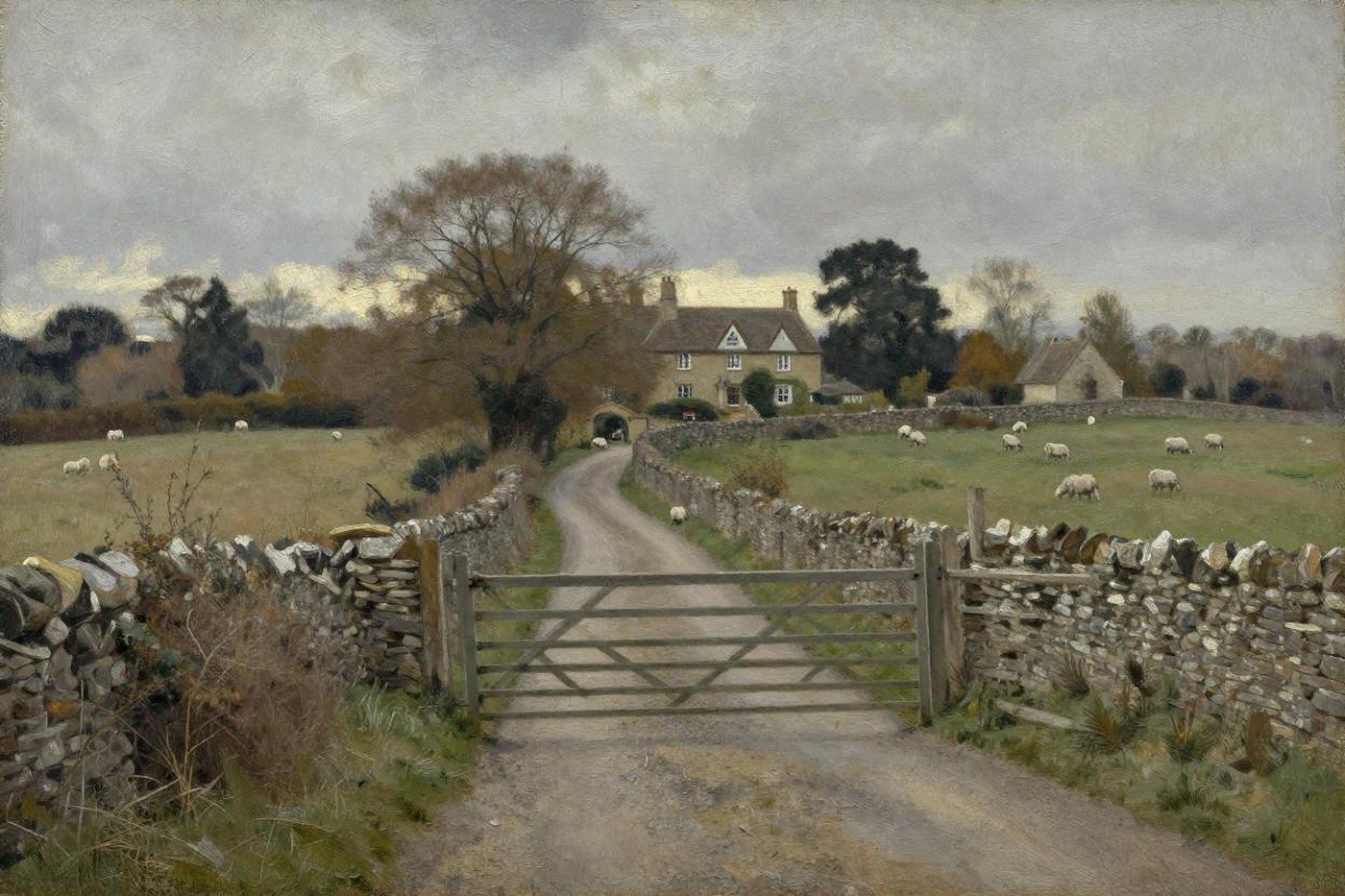
This is where the novel's central and most uncomfortable move happens, and it's a move a philosophy text couldn't make the same way: the clones never revolt. Kathy, Tommy, and Ruth learn the shape of their fate gradually across childhood and young adulthood, and their response is not resistance but a kind of managed grief, occasionally interrupted by half-belief in rumors — that a couple truly in love might be granted a "deferral" from donations for a few years — that turn out, when Tommy and Kathy finally ask Miss Emily directly, to have never been real. There is no scene of the clones storming the system, no underground railroad, no moment where the reader's expectation of a rescue plot is rewarded. Ishiguro has said in interviews that he deliberately declined to write an escape narrative because he wanted the novel to be about how people in general — not just clones — live inside systems they know will end them, whether that system is mortality itself or an institution with the power to determine when a life stops mattering. Kathy's late reflection, watching a field near the site where Tommy has just completed, thinking about how she's not that different from everyone else, being taken along a current she cannot resist, is the novel refusing to let the reader treat the clones' passivity as a special case of moral failure. It's asking whether any of us behave differently, dressed up as freedom, when the outcome is set and the timeline is merely obscured rather than infinite.
Does that refusal earn its weight, or does it let the novel off the hook for a political question it should be answering more directly? This is the fair objection, made by readers and critics who find the passivity of Hailsham's students frustrating on ethical rather than aesthetic grounds — that Ishiguro's insistence on quiet acceptance risks naturalizing exactly the exploitation the book is supposedly indicting, turning a story that could indict a society's willingness to harvest some lives for others into a meditation on mortality so universal it loses its political edge. There's real force to this. A novel about beings bred and killed for spare parts that ends up sounding, in its final pages, like a novel about the general sadness of being alive and finite, risks smuggling the reader out of the specific injustice and into comfortable philosophical abstraction — the move any privileged reader is most tempted to make when confronted with a story about people less free than themselves.
But the novel earns the move rather than merely making it, because it never actually erases the specific injustice; it holds both registers at once and asks the reader to notice the friction between them rather than resolve it. Kathy's donations are not a metaphor for death in general. They are literally forced, literally premature, literally for someone else's benefit, and the text is precise about that every time it matters — Ruth's devastating, unprompted apology near the end of her life for the cruelty she inflicted on Kathy and Tommy as teenagers, urging them to seek a deferral she knows probably doesn't exist, is not a scene about mortality in the abstract. It's a scene about a person trying, too late, to claim some agency inside a system built to deny her any, and failing, and that failure is the point Ishiguro is making about what a bioethics framework organized around usefulness produces: not monsters who don't notice their victims are suffering, but ordinary people, like Miss Emily, who notice completely and proceed anyway, because the alternative would cost something the wider world has already decided it isn't willing to pay. That's not a retreat into universal mortality. It's a specific claim about how societies manufacture indifference to a harm once the harm has been made structurally convenient, and the universal register of the ending doesn't erase that claim so much as extend it outward, asking whether the reader's own comfortable life rests on harms rendered similarly invisible by distance and convenience rather than by biology. Judged on whether it earns that extension rather than merely gesturing at it, the novel does the harder thing: it makes you finish the book uncertain whether Kathy's resignation is a moral failure worth condemning or the most honest possible response to a world that offered her nothing else, and it refuses to resolve that uncertainty for you.