Power & Politics
What power does to the people who hold it and the people who don't.
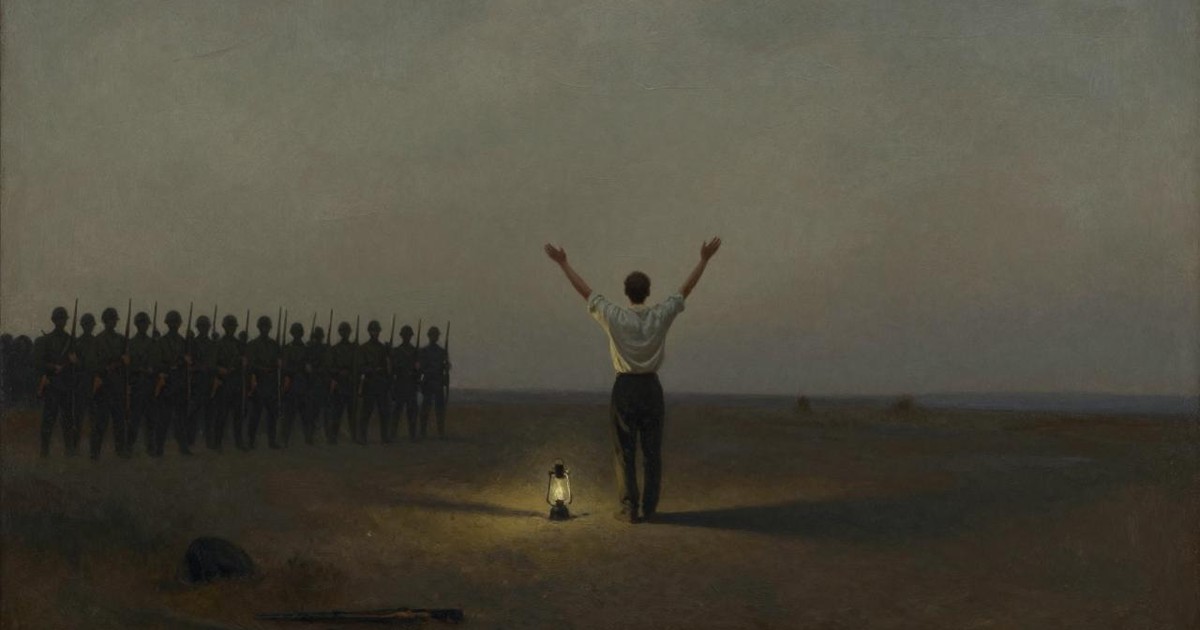
Power, in the sense this topic cares about, is the ability to make someone else's reality. It is not just force, though force is one of its instruments. It is the capacity to set the terms other people have to live inside, whether they agree to those terms or not.
The classical political theorists gave us the first vocabulary for this. Machiavelli described power as it actually operates, stripped of the moralizing that usually surrounds it. Hobbes argued that the alternative to concentrated power is worse than the domination it enables. Rousseau tried to imagine a form of collective power that could be legitimate rather than merely effective. Between them they set the terms of a debate about power and consent that is still running.
The twentieth century added a second layer of diagnosis. Arendt asked what it means for evil to become procedural, carried out by people who are not monsters but merely following the incentives in front of them. Foucault relocated power away from the throne and the parliament and into the architecture of everyday institutions: the school, the clinic, the prison, the norm. Fanon showed what power looks like from underneath it, in the colonized rather than the colonizer.
Power today rarely announces itself as a king or a law. It runs through corporations, platforms, and infrastructures, and through norms so ordinary that most people never register them as power at all. A feed that decides what you see is exercising power. A workplace culture that decides what can be said out loud is exercising power. This is what makes the subject harder to study than it looks: the more effective a form of power is, the less visible it tends to be.
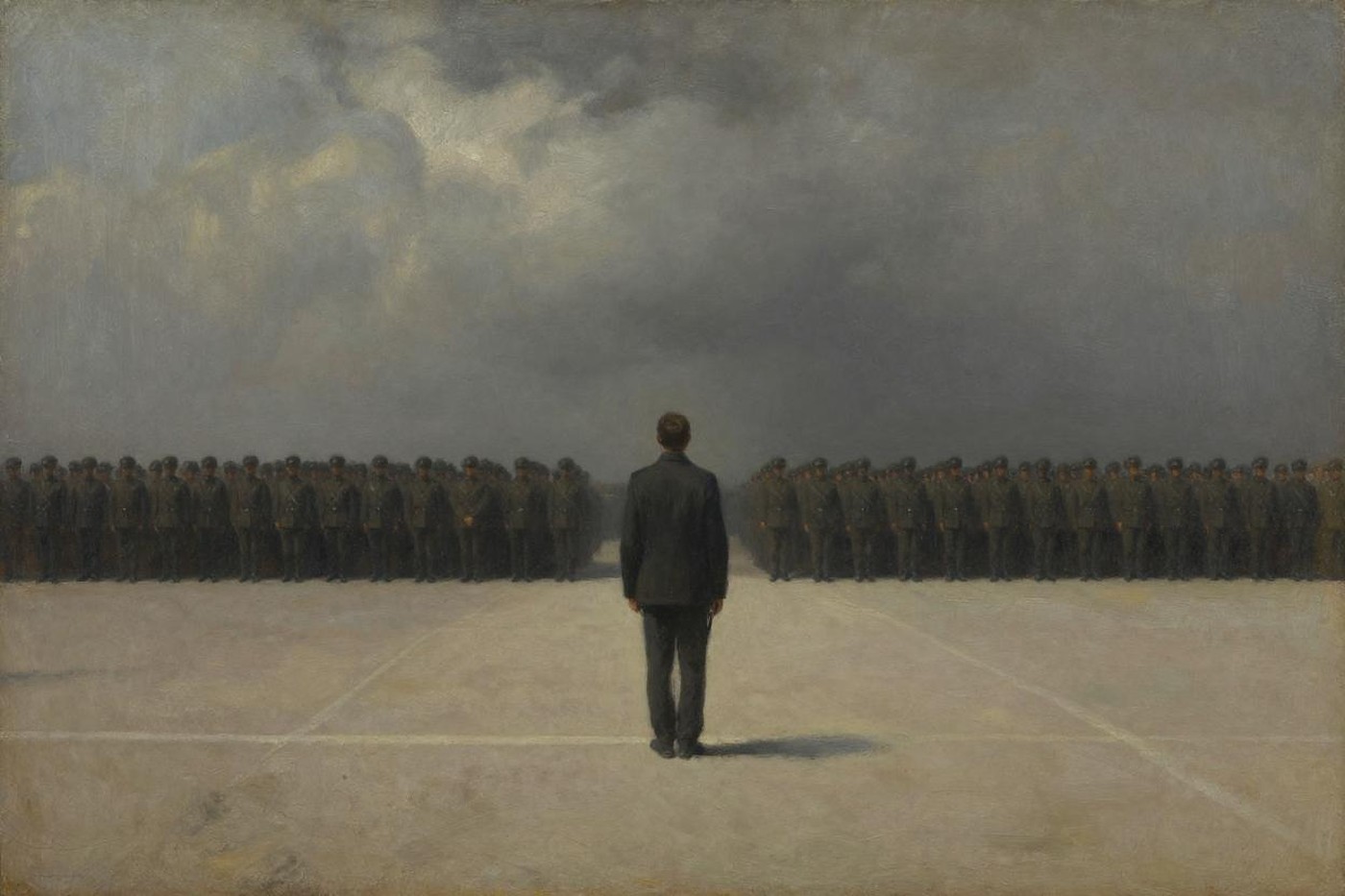
Reading this topic well means applying a kind of four-column method: what a thinker claimed, why they claimed it, what the strongest objection is, and what survives the objection. Power is a subject that punishes lazy reading, because it is also a subject people have strong incentives to misdescribe, in both directions.
Dystopian fiction has often done the theoretical work more honestly than theory itself. Orwell, Huxley, Le Guin, and Atwood are read here as political theorists working in narrative form, not as entertainers with a grim streak. Each of them made a specific, falsifiable claim about how control actually works, and those claims disagree with each other in instructive ways.
Two failure modes recur whenever people write about power. The first is the team-sport version, where power is simply a weapon the other side has and mine doesn't. The second is the both-sides version, which flattens every exercise of power into moral equivalence regardless of scale or consequence. Neither is a serious way to think about the subject, and this topic tries to avoid both.
This topic overlaps heavily with Ethics, Science & Technology, Identity & Self, and Religion & the Sacred, and essays here will sometimes point across to those topics rather than repeat the argument.
In this topic:
The Volume Was the Argument — Orwell's 1984 and the flood-the-zone theory of disinformation
Two Ways to Read a Panopticon — Bentham and Foucault on self-policing power
The Cage You'd Choose — La Boétie on why people serve tyrants they could refuse
The Handmaid's Tale — Atwood's Gilead read against present-day bodily-autonomy debates
This is a young topic: five essays live here now, toward a working target of eleven.