The Cage You'd Choose
Étienne de La Boétie asked why people serve tyrants when they could refuse. The answer is uglier than freedom requires.
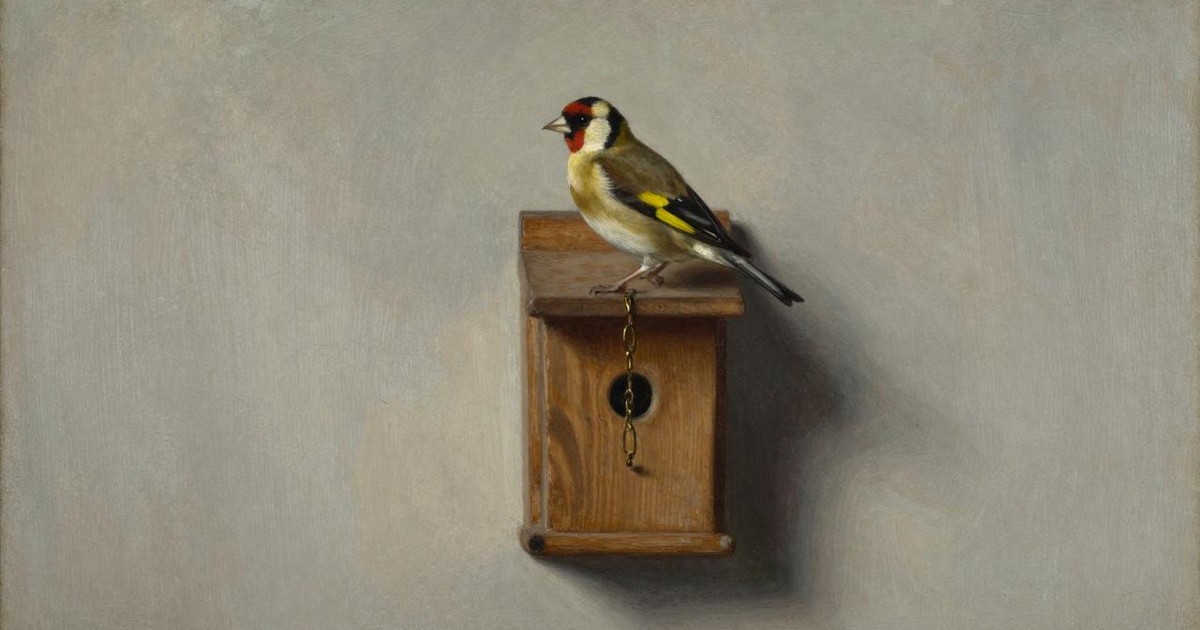
In 1553, a young French lawyer wrote a pamphlet that his friends begged him not to publish, fearing it would get him killed. The writer was Étienne de La Boétie, thirty years old, a magistrate in Bordeaux, and the pamphlet was Discourse on Voluntary Servitude, the strangest political question ever put into print: why does anyone obey a tyrant?
Not the normal question of political theory, which is how we should govern ourselves, or what rights the sovereign owes the subject. The La Boétie question was simpler and more disturbing. A tyrant has no power except what you give him. He is one man. You are thousands, millions. If you withdrew your consent tomorrow, he would fall like a puppet whose strings have been cut. The tyrant does not chain you. You chain yourselves, and then blame him for the lock.
The essay is short enough to memorize, but its argument does not age. La Boétie did not believe tyranny was mysterious. He believed it was boring. People submit because they are accustomed to it, because their parents submitted, because there are rewards for the first fifty who comply and punishments for the last fifty who resist, because there is honor in serving, shame in defiance, and the shame outweighs the cost of obedience. The mechanism he described is not coercion in the simple sense. It is training. A population is trained to serve, and the training is so effective that they cannot imagine their lives without it.
He offered a taxonomy of submission. First, there is the born servant, who has never known anything else. Second, there is the habituated servant, who forgets that servitude was once optional. Third, there is the invested servant, who has received favors from the tyrant and now defends the arrangement because admitting it was unjust would mean admitting their own complicity. Fourth, there are the enforcers, who profit from enforcing obedience on behalf of the tyrant, and who are themselves enslaved by their dependence on the tyrant's favor. Each group has different reasons, all of them insufficient, none of them excusable.
The pamphlet remained unpublished during La Boétie's lifetime. He died at thirty-two, friends say of exhaustion, possibly plague, possibly poison. His manuscript was passed to Montaigne, who praised it but never made it widely known. It surfaced decades later, printed by Huguenots during the French Wars of Religion, used as ammunition against the crown. The essay survived its author and his publisher and its original political purpose. It keeps appearing whenever people ask why they obey, and it keeps being ignored when the answer does not suit.
Part II: The training that precedes the question
The mechanism deserves slower attention, because this is where La Boétie differs from every other theorist of liberty.
He was not writing about revolution. Revolution implies a moment of awakening followed by action. La Boétie suspected most people never awaken. They are born into the cage, raised inside it, and taught that the bars are structural. The training begins at home: the father obeys the landlord, the landlord obeys the lord, the lord obeys the king, and the son watches this chain and learns it as the order of the world. Education teaches obedience under the guise of virtue, discipline, character. The school trains children to follow instructions, to sit still, to raise their hands, to accept authority as legitimate, to punish peers who disrupt the arrangement. Work trains adults to trade hours for wages, to measure worth by output, to accept that their time is not their own.
Add the cultural apparatus. Art celebrates heroes who serve the king, poets praise the monarch, the church blesses the ruler, and dissent is framed as sin. The tyrant does not need to command loyalty directly. He hires the institutions that produce loyalty. The result is a society where disobedience is not just punished, it is unthinkable. The question of freedom does not arise because freedom has no name in the vocabulary available to the servant. He speaks the language of duty, honor, duty-bound, obligation. The language of refusal does not exist in his mouth.
Third, La Boétie noted the role of spectacles and distractions. Circuses and games, festivals and parades, feasts and entertainments, distributed strategically to keep the masses occupied, divided, and pacified. He described bread and circuses two centuries before Juvenal coined the phrase. The point was not that pleasures are bad. The point was that they were weapons deployed by design. The tyrant provides pleasure because pleasure is cheaper than chains, and it works better. A happy slave does not plot rebellion.
Fourth, the enforcers are the secret to the system's stability. The tyrant does not stand alone. He is surrounded by a hierarchy of enforcers, each dependent on the one above and dominant over the one below. Each enforcer has a stake in the arrangement, and each will defend it more zealously than the tyrant himself would. The guard protects the prison not because he loves the prisoner, but because the prison employs him. Remove the guard, the prisoner escapes. Remove the wage, the guard starves. The enforcer chooses the prison because it is his livelihood, even if it is also his cage.
These are not conspiracy theories. They are descriptions of how large systems maintain themselves without requiring constant violence. The violence is reserved for the exceptional case, the public example, the punishment that reinforces the norm. Most of the time, the threat is enough. The majority comply because compliance is easier than the alternative, and the majority are trained to believe the alternative is worse than the known misery.
Part III: The modern cage
Apply the anatomy to the present, and the shape is familiar.
Start with the economic arrangement. A person works sixty hours a week, pays rent, pays mortgages, pays loans, buys insurance, maintains the car that gets them to work, spends weekends recovering enough to work another sixty hours. The system does not need to threaten them. It has already structured their life so that stopping is catastrophic. The fear is not of imprisonment. It is of poverty, of homelessness, of medical bankruptcy, of watching a parent suffer without treatment. The cage has bars made of bills, and the locks are keyed to monthly payments. The person does not wake up one morning and decide to serve. They wake up one morning and discover they have been paying for forty years, and the payments continue.
Add the cultural apparatus, updated. Entertainment industries occupy attention that might otherwise turn toward reflection. Social media fragments communities that might organize resistance into niches of consumption and opinion. Algorithms distribute anger at convenient targets while leaving the structure untouched. News outlets compete for views by amplifying conflict rather than analysis, because conflict is profitable and analysis is not. The spectacle is no longer bread and circuses. It is personalized, targeted, optimized, and it knows exactly which distraction will hold your eyes longest.
The training is more thorough than La Boétie could have imagined. Children grow up with screens as tutors, with platforms as teachers, with algorithms as mentors, learning before literacy that attention is currency, that performance earns validation, that obedience to the feed is rewarded with engagement. Schools train for standardized tests rather than independent thought. Universities train for jobs rather than citizenship. Workplaces train for metrics rather than judgment. The result is a population that is highly skilled at compliance and largely illiterate at refusal.
The enforcers have multiplied. Every platform user who reports content is an unpaid moderator. Every employee who polices workplace norms is an unpaid HR representative. Every parent who shames their child for deviance is an unpaid social control agent. The system recruits everyone to enforce it on its behalf, and pays them with belonging, with status, with the fragile comfort of being on the right side.
And the spectacle has evolved into something La Boétie would recognize instantly as his own argument updated. Personalization is more effective than universality. You get the distraction designed for you, the outrage engineered for your vulnerabilities, the identity affirmation tailored to your anxieties. The cage fits more snugly, and the bars feel softer, and the prisoner mistakes the fit for care.
Part IV: The counter-argument of necessity
The strongest objection to La Boétie's framework deserves full weight, because it lands on something real.
Some forms of coordination are necessary. A society without rules collapses into violence. Traffic lights require obedience. Vaccination programs require compliance. Disaster relief requires coordination. The question is not whether we serve any authority, but which authorities serve us. The alternative to tyranny is not anarchy. It is democracy, and democracy requires obedience to laws we have written for ourselves, to courts we have appointed, to officials we have elected. Is this voluntary servitude, or is it something else?
Also: people have withdrawn consent and it has worked. Labor unions won contracts. Civil rights movements overturned Jim Crow. Women won the vote. Colonized nations won independence. The history of the last three centuries is partly the history of cages being dismantled by people who refused them. La Boétie's essay assumes the question cannot be answered, but the answer has been demonstrated repeatedly, across generations, at great cost. The refusal works. The tyrant falls.
Both objections are true. And both concede the harder point: that withdrawal of consent is painful, costly, dangerous, and rarely succeeds unless coordinated at scale. Individuals can leave the system, but the system continues. A single person quitting their job does not collapse capitalism. A single person deleting social media does not dismantle surveillance. The cage holds because everyone inside believes someone else will exit first, and no one exits until they have convinced themselves it is safe, and the safety never comes until it is too late.
The modern twist, which La Boétie did not anticipate, is that the cage advertises itself as liberation. The job is freedom. The mortgage is security. The platform is connection. The algorithm knows you better than you know yourself, and it shows you exactly what you want to see, and you call that truth. The enforcer calls themselves a community member. The service calls itself empowerment. The training calls itself education. The language of refusal has been replaced with the language of choice, and the choice is between cages, all of them owned by the same landlord.
So the question this essay leaves you with is not the La Boétie question, which is too large. It is smaller and more urgent: what one thing in your life feels like a cage you chose? What payment do you make regularly that keeps you compliant? What distraction occupies the hours you might use for thinking? Which enforcer are you, and whom do you police? Where is the place where you could withdraw your consent tomorrow without catastrophe, and why have you not done it?
The answers will be uncomfortable. They will vary by person, by class, by geography, by circumstance. Some cages have bars of debt, some of fear, some of shame, some of habit. Some cages are visible, some are invisible. All of them require daily maintenance by the prisoner, who pays in time, in energy, in pieces of themselves. The tyrant does not collect the tax. You do, and you send it forward without questioning the recipient.
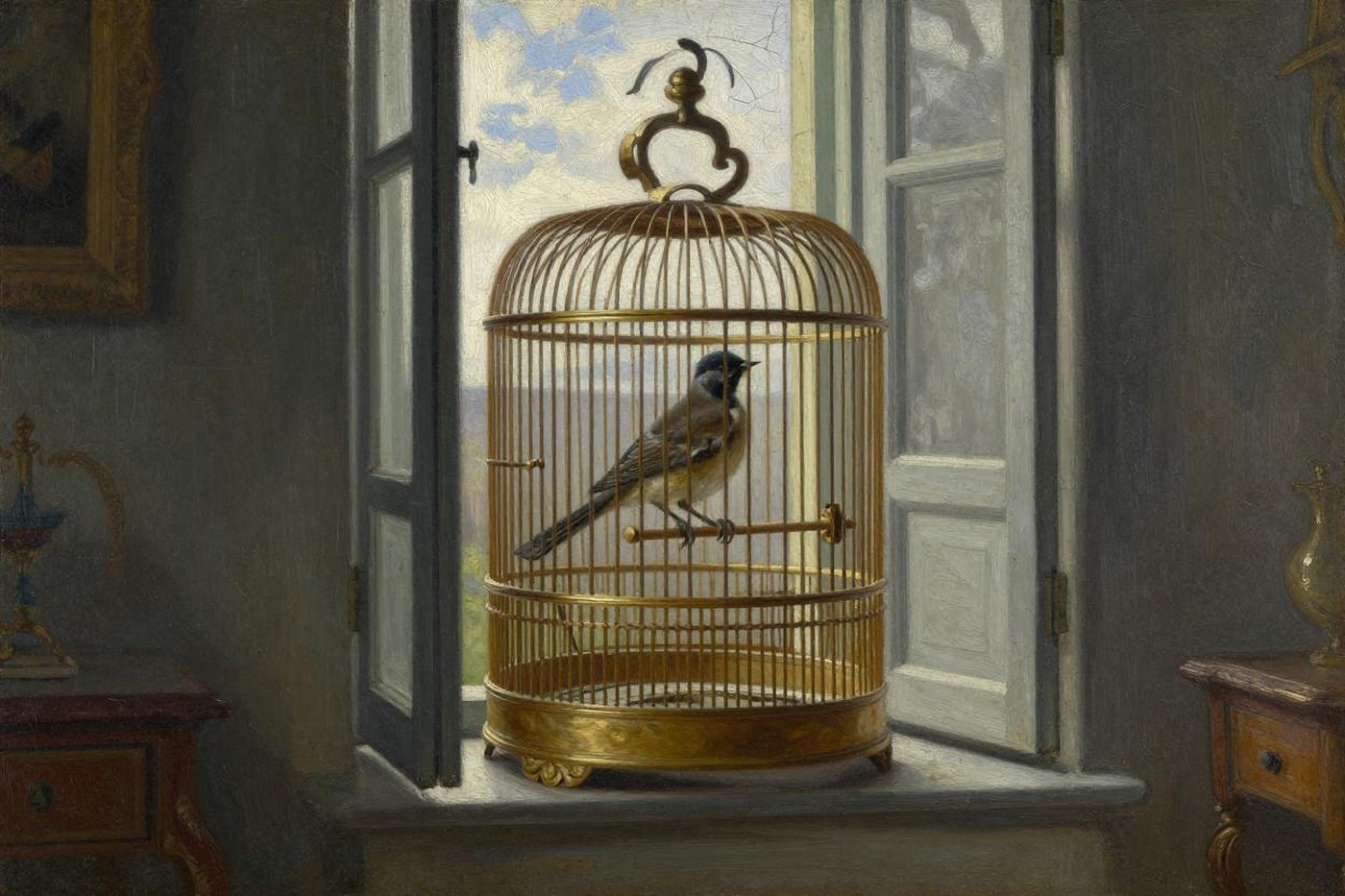
Voluntary servitude is not a political theory. It is a practice. It happens every morning when you choose to open the app instead of the book, to scroll instead of think, to perform instead of speak, to serve instead of ask. The cage is not locked from the outside. It is locked from within, and the key is in your hand, and you keep handing it to the person who watches you pick it up and do not take it back.
Stop paying. Withdraw the consent. The door is open. The tyrant does not stop you. You do.
Related topic: Power & Politics.
Further Reading
The Tyranny of “You Can”
Byung-Chul Han on the burnout society, where freedom itself becomes the boss.
Byung-Chul Han on the burnout society, where freedom itself becomes the boss.
The Volume Was the Argument
Orwell imagined a state that didn’t need to lie convincingly, only constantly.
Orwell imagined a state that didn’t need to lie convincingly, only constantly.