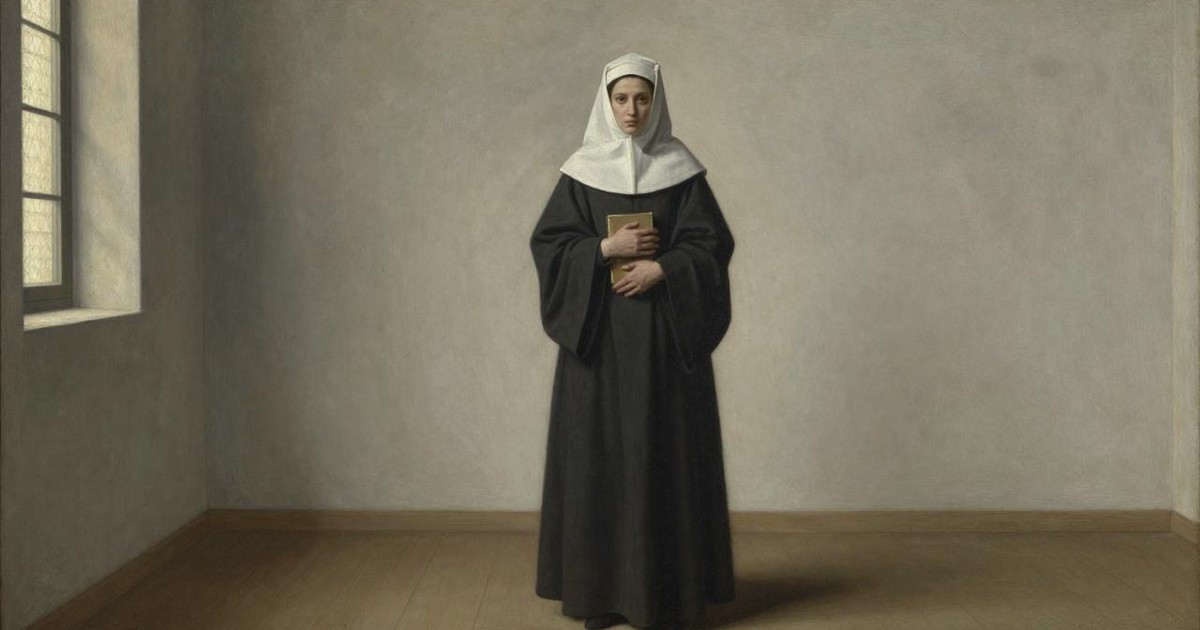
Margaret Atwood has said for forty years that she invented nothing in The Handmaid's Tale. Every practice in Gilead, she has pointed out in interview after interview, has a historical precedent: forced birth, enforced dress codes signaling caste and function, the stripping of women's names, the seizure of children from mothers judged unfit, state-controlled reproduction, the use of religious language to justify all of it. The novel's famous "Historical Notes" appendix, a mock academic paper delivered at a symposium two centuries after Gilead's collapse, makes the same claim from inside the fiction: scholars picking through the wreckage, cataloguing what happened, faintly condescending toward the primitive society that produced it. The device does two things at once. It tells you Gilead ends. And it tells you that ending doesn't guarantee understanding — the future scholars snicker at Gilead's crudeness while missing exactly the mechanism that built it, which is the reader's warning as much as the characters'.
The plot is simple enough to state in a sentence: after a coup blamed on Islamic terrorists and enabled by a catastrophic fertility collapse, a Christian theocracy seizes the United States, and Offred, a woman who once had a name, a husband, a daughter, and a job, is conscripted as a Handmaid — a fertile woman assigned to a high-ranking Commander's household for the sole purpose of bearing his child, with his infertile wife present for the monthly ritualized rape that Gilead calls the Ceremony. What makes the novel more than a premise is Atwood's decision to tell it entirely from inside Offred's compromised, rationed consciousness. She reveals almost nothing directly. We learn about Gilead the way Offred is forced to learn about it, in fragments overheard through walls, in gestures decoded from women she isn't permitted to speak freely with, in flashbacks that arrive unbidden because they're the only part of her interior life the regime hasn't yet colonized. The prose is claustrophobic on purpose. Offred narrates in a present tense that keeps second-guessing itself — "I made that up. It didn't happen that way. Here is what happened" — because a woman denied any other form of self-authorship is left with the authorship of her own account, unreliable as it is, as the last thing that's hers.
That unreliability is the novel's most philosophically serious move, and it's easy to read past it. Offred tells us she's constructing this story for someone, maybe no one, maybe a future reader she'll never meet, and she revises it in front of us. She admits to inventing details, softening one man's cruelty, imagining a version of an encounter that felt better to imagine than the one that happened. A story told under totalitarian conditions, Atwood is arguing, cannot pretend to documentary neutrality, because the teller has already been shaped by the regime's demand that she not tell it at all. This isn't a flaw in Offred's testimony. It's the testimony's central fact, and the Historical Notes appendix confirms it: the scholars debate which parts of Offred's account are corroborated, which parts might be fabrication, whose historical record even counts as reliable once you understand how thoroughly Gilead erased the paper trail of the world before it. The novel asks what survives when a state controls not just bodies but the record of what was done to them, and it answers: fragments, doubted fragments, told by someone who isn't sure herself.
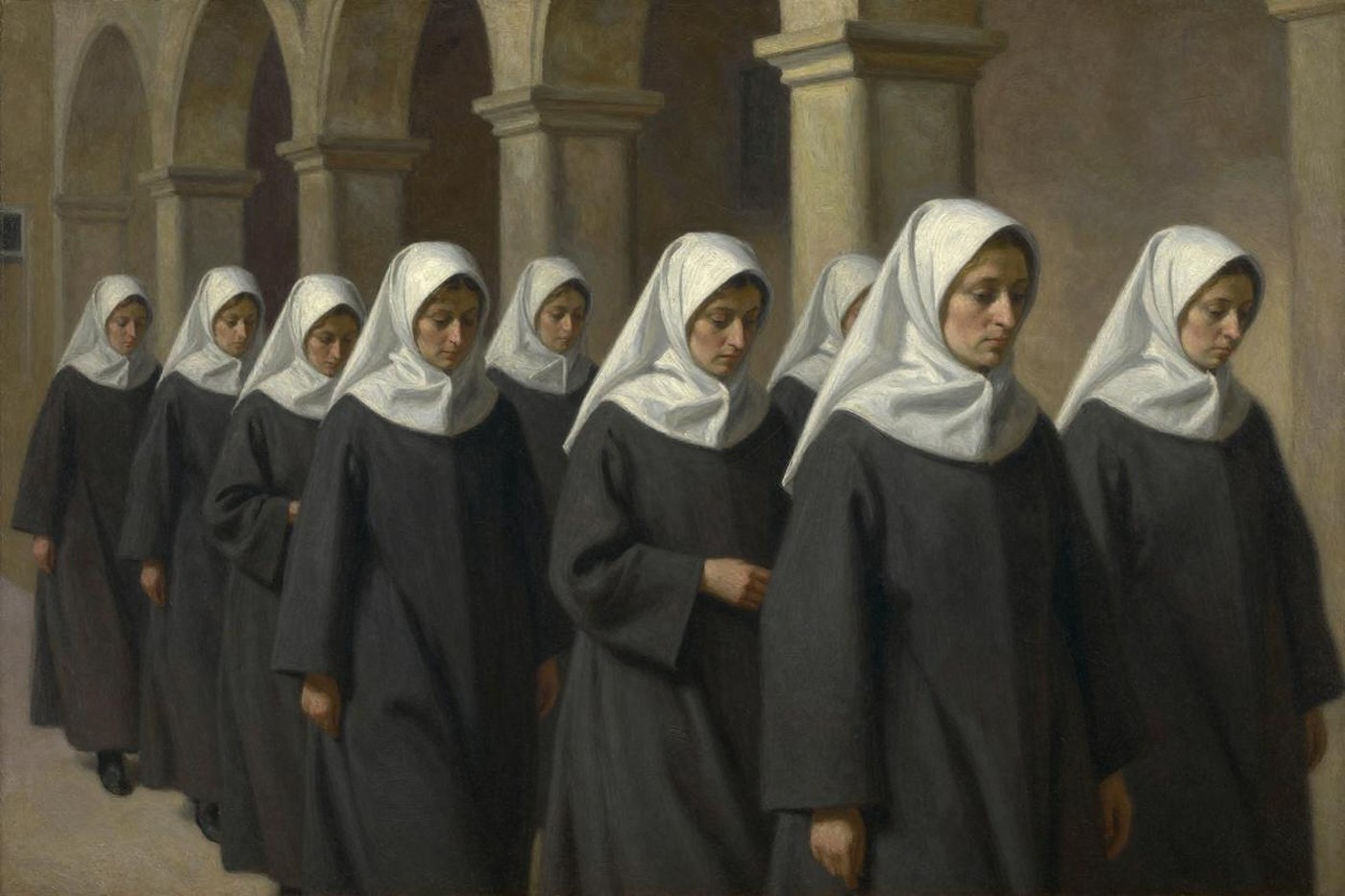
Read against present-day debates about reproductive autonomy, the novel earns comparisons that get made constantly and dismissed just as constantly, usually by people arguing past each other. The dismissal usually goes: Gilead is a totalizing theocracy that abolishes women's legal personhood entirely; no contemporary debate about abortion restriction, however severe, resembles a system that assigns fertile women to households as sexual property. That's true as far as it goes, and Atwood herself has resisted treating the novel as a one-to-one prophecy of any particular political moment. But the dismissal misses what the book is actually diagnosing, which isn't a specific policy outcome. It's a mechanism: the argument, made by Gilead's architects and echoed by real historical movements, that a crisis (here, a fertility catastrophe) justifies suspending existing rights as an emergency measure, that women's bodies become a resource to be managed for the collective good once that emergency is declared, and that the management gets dressed in the language of protection and sanctity rather than control. Offred's mother, a second-wave feminist glimpsed in flashback, warns her daughter's generation that rights taken for granted are never permanent, and the daughter doesn't listen because the rights feel like weather, a fixed condition of the world rather than a political settlement that could be renegotiated. The novel's real argument isn't "this exact regime is coming." It's "the logic by which any regime claims a body as state property doesn't announce itself as evil. It announces itself as necessary, and then as sacred, and by the time it's recognizable as neither, compliance has already become survival."
Where the novel is vulnerable to fair criticism is its treatment of race and its narrow lens on whose suffering counts as central. Gilead's racial politics are addressed only glancingly — the "Children of Ham" resettled in what the regime calls National Homelands, an obvious echo of apartheid-era relocation, mentioned and then dropped. Critics, particularly since the novel's television adaptation made the omission more visible by casting Black actors in Handmaid roles without addressing what that would actually mean under a regime built on white Christian nationalism, have pointed out that Atwood's Gilead effectively disappears Black America to keep the story focused on a white protagonist's specific horror. This is a real limitation, not a misreading imposed on the text. The novel diagnoses reproductive control with precision and does comparatively little with the racial hierarchies that have historically run alongside and through reproductive control in the actual United States — forced sterilization of Black, Indigenous, and disabled women; the withholding of family structure from enslaved people; the different reproductive surveillance the state has directed at women depending on race and class. A book that wants credit for prophetic clarity about reproductive politics has to answer for what it left out of the picture, and The Handmaid's Tale mostly doesn't.
Does the novel still hold up as an internally coherent argument on its own terms, independent of what it omits? Largely, yes, and the strongest evidence is how little of Gilead's machinery requires the reader's suspension of disbelief once you accept the founding premise. The class stratification among women — Wives, Marthas, Handmaids, Aunts, each with different degrees of proximity to power and different stakes in defending the system that constrains them — is the novel's sharpest insight, because it refuses the comforting idea that women would simply unite against a regime built on controlling women. The Aunts, who train and discipline the Handmaids, are Atwood's answer to a question every account of institutional cruelty eventually has to face: complicity does not require conviction, only a survivable position inside the hierarchy and the rationalization that comes free with it. Aunt Lydia is never given interior access in this novel the way she later is in the sequel, but even here she's not a monster without motive. She's a woman who found, within an annihilating system, a seat with slightly more power than the alternative, and she defends that seat with the zeal of someone who knows exactly how replaceable she is.
The ending resists the closure a thriller would deliver. Offred is led away in a van, told it's toward rescue, unable to know if that's true, and the narrative simply stops there, mid-uncertainty, handed off to the ironic distance of the Historical Notes. That refusal to resolve is not a cop-out; it's consistent with everything the book has already told you about what testimony can and cannot promise. We don't get to know if Offred survives because Offred herself, at the moment the tape recording ends, doesn't know either, and a novel this committed to the limits of a single constrained consciousness has no business pretending otherwise. Judged by what it set out to do — render totalitarian control of reproduction from the inside, and interrogate what kind of witness a person denied a public voice can still bear — The Handmaid's Tale does what it claims to do, rigorously and without cheap comfort. Judged by whether it accounts for every body a system like Gilead would actually claim, it falls short, and that shortfall is worth stating plainly rather than treating as a footnote to an otherwise unimpeachable classic.