Reviews / Flourishing
The Right to Be Unhappy
Huxley's World State locks away the old books but hardly needs to. When the Savage asks for God, poetry, danger, freedom, goodness and sin, he is told he is claiming the right to be unhappy.
Flourishing · 10 min read
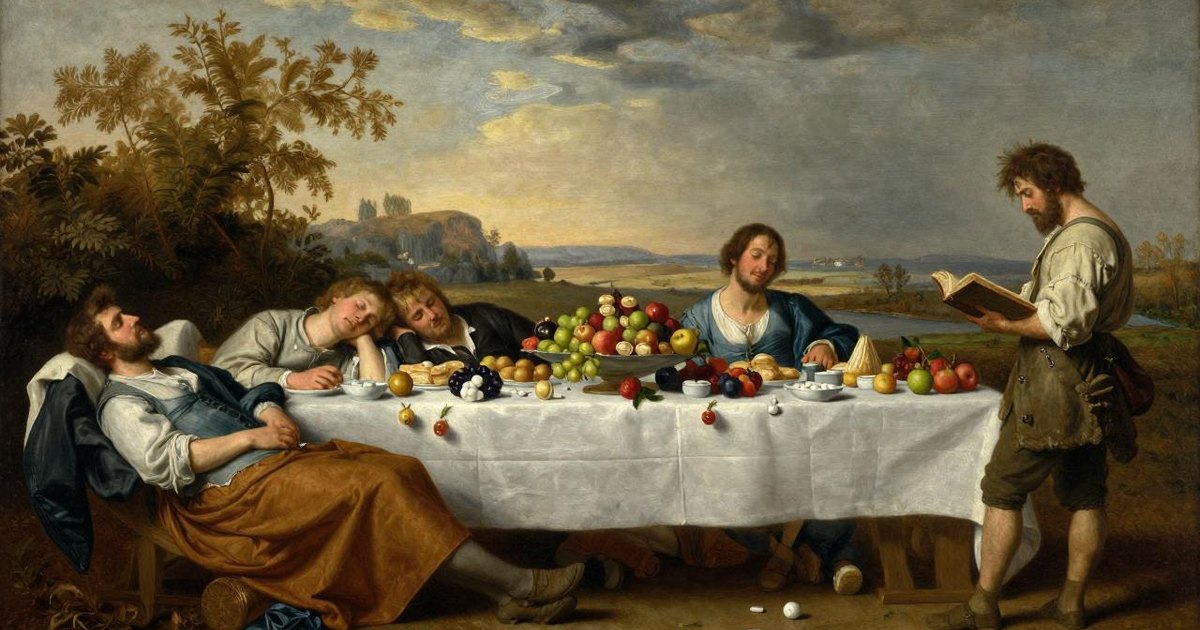
In 1932, Aldous Huxley took the title of Brave New World from a girl who had seen almost nothing, and the book is built on her mistake. Huxley invents a society that governs by giving people what they want, then sends in a reader of Shakespeare to object. The question for the reader is plain: was Huxley right that pleasure, not fear, is the more effective way to control people? The novel's answer is yes. Its trouble is that it cannot imagine anyone saying no well.
The line comes from the last act of The Tempest. Miranda, raised on an island with only her father and a monster for company, sees a crowd of shipwrecked noblemen and cries out, "O, wonder! / How many goodly creatures are there here! / How beauteous mankind is! O brave new world, / That has such people in't!" The men she is admiring include a usurper and a would-be murderer. Her father answers in four words: "'Tis new to thee." The text is at the MIT Shakespeare edition, and the irony lives entirely in Prospero's reply.
Huxley gives the line to John, the Savage, a young man raised on a New Mexico reservation whose one real book is a battered Complete Works of Shakespeare. He says it first with Miranda's innocence, when he learns he will be taken to London. He says it again in chapter 15, minutes after his mother's death, in the hospital vestibule among queues of identical Delta twins lining up for their soma ration, and this time the words come out with Prospero's contempt. Moments later he is throwing the staff's soma rations out of a window. The novel's arc runs between those two readings of one phrase.
What makes the book still worth arguing with is that its dystopia has no torture chamber. People in the World State are decanted from bottles into castes, conditioned in their sleep, supplied with a drug called soma, and encouraged into casual sex and endless consumption. Almost everybody is content. Huxley's wager is that contentment is the tighter cage, because a person who is afraid still knows what she wants, and a person who is satisfied has stopped asking.
Part II: What does the World State want from its citizens?
It wants stability, and it has worked out that stability requires wanting to be exactly what you are. The opening tour of the Hatchery makes this explicit. Embryos are dosed and chilled to fit their future jobs, and children are taught through repetition to love their station and dislike what lies outside it. Obedience and desire are engineered until they are the same act. This is Power & Politics conducted almost entirely through appetite.
Almost entirely. The book's thesis meets its hardest test in chapter 2, and Huxley puts it there on purpose. In the Neo-Pavlovian nursery, Delta infants crawl toward bright picture books and bowls of roses. Then the alarms go off, the floor delivers a shock, and the babies scream. After a couple of hundred repetitions, the Director explains, they will grow up with an instinctive hatred of books and flowers. He says this the way a man describes a heating system.
So the regime runs on fear after all, applied once, in infancy, before memory can hold on to it. Everything afterward can be pleasant because the pain came first and was hidden. That makes Huxley's claim more precise than the slogan version. Fear is front-loaded and buried, and pleasure governs the adult who no longer knows why he flinches from a book. The Director's calm is the novel's real horror, because it shows that the people who administer the pain need not feel it either.
The same double structure governs the library. The World State does ban books. The old ones were suppressed in a campaign against the past, and Mond keeps the forbidden Shakespeare and Bible locked in a safe. In the foreword to his 1985 book Amusing Ourselves to Death, Neil Postman made Brave New World one half of a contrast: Orwell feared those who would ban books, and Huxley feared there would be no reason to ban one. That is Postman's framing, and it captures the tendency. The text is harsher. The ban exists, and it is backup, because the nursery has already made the books unwanted.
Orwell, reviewing Zamyatin's We in Tribune in 1946, claimed that Huxley had drawn on that earlier novel of a numbered, glass-walled state. Huxley said he had not read We before writing his own. Whatever the debt, the difference between them is instructive. Zamyatin's state still watches and punishes its adults. Huxley's does its punishing in the cradle and then barely needs to watch, and that is the leap his novel made.
Part III: Why does the Savage quote Shakespeare at the man who runs it?
Because Shakespeare is the only moral vocabulary he has. The Savage learned to read from a hatchery workbook his mother had carried out of the World State, then found the Complete Works that her lover brought her on the reservation. He meets every situation in London with a borrowed line. He is disgusted by Lenina's easy sex and answers her with Othello. When his mother dies drugged and cheerful, he reaches for the tragedies because nothing in the World State has words for grief.
Mustapha Mond, one of the ten World Controllers, opens his safe in chapter 17 and takes out the books he has forbidden everyone else. He knows them better than the Savage does. He tells him that tragedy needs instability, that great art needs suffering, and that the World State chose comfort over both. Then he reads aloud from a French philosopher, Maine de Biran, on how religious feeling grows as the body ages and the passions fade. Mond's gloss is simple. People who never grow old or lonely will never need the consolation, so God has nothing to do.
Watch the Savage here, because this is where the argument is decided. He does not answer the claim about old age. He cannot say why God would matter to someone who lacks nothing, and so he retreats to feeling. He says that people ought to be made to suffer for things, that it would be better if they did, that the World State has made everything too easy. Mond has given a causal account of belief. The Savage replies with a preference. Mond gets reasons, and the Savage gets a mood with Shakespeare's rhythm.
The Savage finally stops quoting and speaks for himself. He does not want comfort. He wants God, poetry, real danger, freedom, goodness and sin. Mond tells him he is claiming "the right to be unhappy," and the Savage, to his credit, accepts the phrase. He takes on old age and disease and fear rather than give up the rest. The refusal is magnificent, and it is where the book's argument starts to wobble.
Part IV: Is "the right to be unhappy" worth claiming?
Mill thought so, and his argument is the one Mond has to beat. In the second chapter of Utilitarianism, Mill wrote that it is better to be a dissatisfied human being than a satisfied pig. He went further: "better to be Socrates dissatisfied than a fool satisfied." The text is on Project Gutenberg. His claim is that pleasures differ in kind, and anyone who has known both the higher and the lower will prefer the higher even at a cost in comfort. It is the classic modern defense of Flourishing over mere contentment.
The World State attacks Mill's test at the root. Mill appealed to the judgment of those who had experienced both kinds of pleasure, and the nursery makes sure almost no one does. Its citizens are conditioned against solitude and old books, so they never acquire the capacities that would let them prefer Socrates. For the population, Huxley imagined a society that has quietly abolished the judge.
Except for one man. Mond is exactly Mill's competent judge. He has read Shakespeare and knows what soma gives, and as a young physicist he did work dangerous enough that he was offered exile for it. He chose the Controllership instead. By Mill's standard he prefers the higher pleasures, and he keeps them in his safe. Then he chooses the lower ones for everybody else. Mill's test passes in Mond and fails as policy, and that is the paternalist's reply to Mill: a judge's preference for himself says nothing about what he may choose for others. Mill spent On Liberty arguing the opposite. Huxley gives the paternalist the better lines.
Robert Nozick sharpened the question in Anarchy, State, and Utopia (1974) with his experience machine, a device that would give you any experiences you wanted while you floated in a tank. Would you plug in for life? Nozick's intuition was no, and the Stanford Encyclopedia of Philosophy sets out how central that intuition became to arguments against hedonism. Many people answer as he did. Later experimental work found the answer depends on framing. Asked whether they would unplug from a life they already have, many people prefer to stay.
That reversal matters for Huxley. The Savage refuses the machine from outside it, which is Nozick's framing. The citizens of London are already inside, and status-quo bias predicts exactly what the novel shows. People raised on soma do not want to be unplugged. So the right to be unhappy is real, but only someone raised outside the system is in a position to claim it.
The case, worked through
Premise: Control by pleasure beats control by fear. The World State stays stable because its adults are satisfied, and satisfaction polices itself.
Objection: The Savage's alternative is no alternative. His refusal ends in a lighthouse and a rope.
Revision: Huxley admitted it. In 1946 he regretted offering only two options and sketched a third he had left out.
Objection: The pleasure rests on pain. The nursery shocks show fear doing the founding work, applied once and hidden.
Verdict: The mechanism holds in its refined form, fear first and pleasure after. The endpoint and the alternative are where the book is weakest.
The Savage's rebellion does not produce a better life. In chapter 18 he withdraws to an abandoned lighthouse and whips himself to purge his desire for Lenina. Sightseers arrive to watch, the scene collapses into a soma-fuelled orgy-porgy into which he is drawn, and the next morning he hangs himself. His book taught him to refuse and taught him nothing about how to live after refusing.
Huxley saw it himself. In a foreword written for the 1946 edition, quoted in The New Atlantis, he said that in 1931 he had been amused by the idea that free will only lets people choose between "insanity on the one hand and lunacy on the other." By 1946 he no longer believed sanity was out of reach. The same foreword says a rewrite would give the Savage a third choice, a society of freely co-operating individuals, set between the utopian and primitive horns of his dilemma. His last novel, Island (1962), is often read as the answer he owed the Savage.
The odd thing is that the novel already contains a third place, and keeps it offstage. Mond tells Bernard and Helmholtz that exile to the islands is practically a reward, where the most individual people in the world end up. Helmholtz asks for a bad climate so he can write. When the Savage asks to go with them, Mond refuses, because he wants to see the experiment continue. The islands are never shown. Huxley gestured at the middle ground, denied it to the one character who needed it, and never dramatized it. What the book withholds is the clearest evidence that its debate was rigged.
Part V: Is our pleasure economy his world or something else?
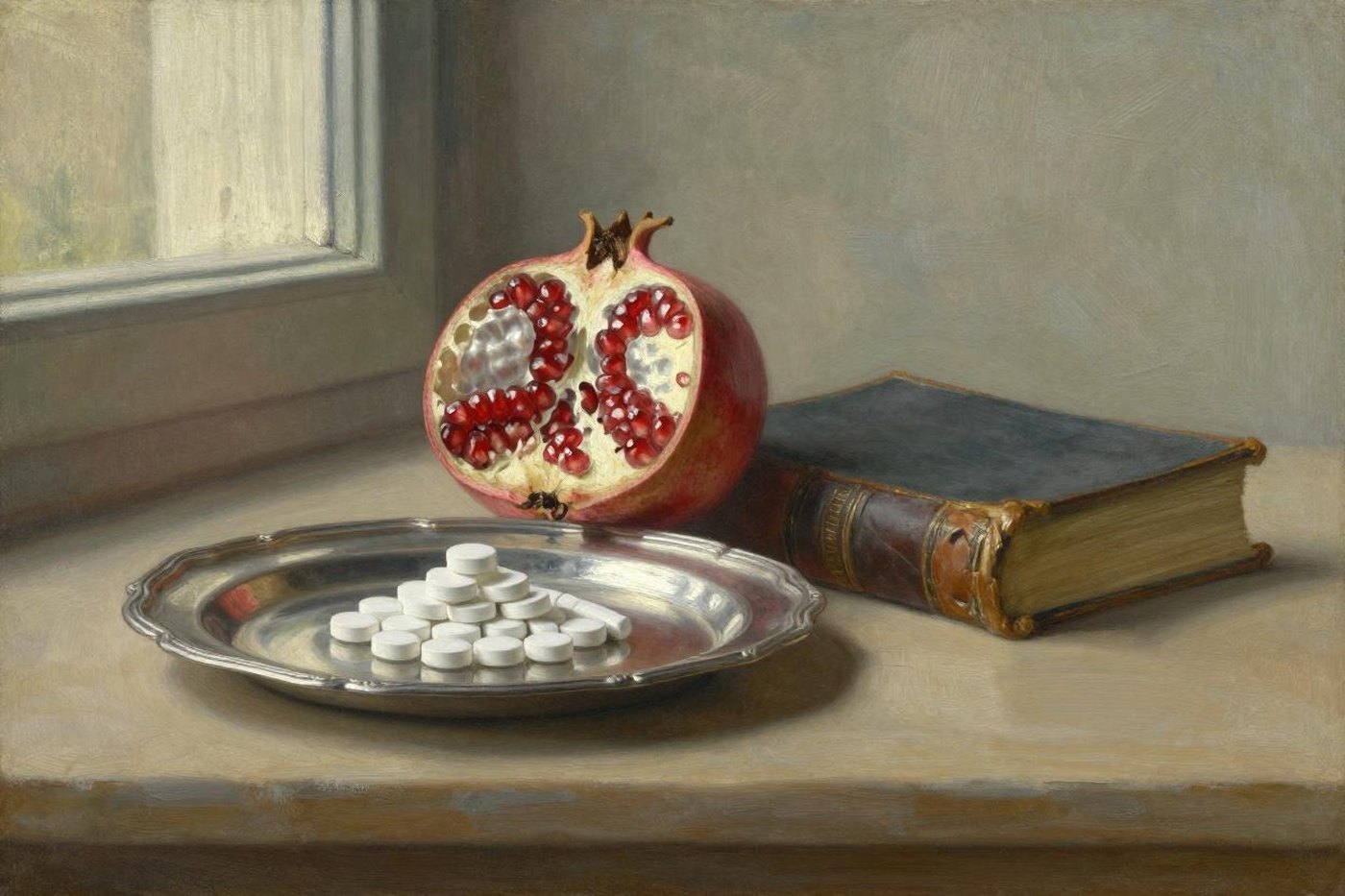
It shares his mechanism and differs in its weather. The present case is not soma. Real medication, from antidepressants to the new weight-loss drugs, treats illness and should not be folded into the metaphor. The closer parallel is the engineered supply of satisfaction, and its purest form is the feed with no bottom, the one that loads the next item before you have decided whether you wanted it.
That design needs no ban. Books are available, and long ones sit unread beside a phone that is always more interesting. Postman's version of the warning looks sharper each year, since no one has to forbid difficulty when ease is always one swipe away. The consumer is not coerced. She is accommodated, and the accommodation reaches further into her attention than any censor could.
The same feed also does something Huxley's world never does. In my own use of it, and I suspect in most people's, it soothes and inflames in the same session, and anger seems to hold attention as well as comfort does. Mond would have logged that as a system fault. His World State produces calm. Ours produces something noisier, selling agitation and satisfaction through the same channel. Huxley assumed satisfaction would flatten conflict, and here his sleep-taught slogans look dated.
The nursery scene holds up better than the rest of the book. Our conditioning is mostly early, mostly invisible and administered by people who describe it calmly, in the language of engagement. Huxley's picture of pleasure resting on a buried lesson reads less like prophecy than description.
That leaves the Savage's claim standing, and the Savage's life as a warning about how not to press it. Huxley spent the rest of his career looking for the island he refused him. The novel ends on something smaller than an argument: the Savage's feet, hanging in the lighthouse archway, turning slowly one way and then the other, like two compass needles that cannot settle on a direction.
Related topics: Flourishing and Power & Politics. Part of the Reviews column.
Read the book: Brave New World at Bookshop.org, which supports independent bookstores.
Further Reading
Nobody Had to Burn Anything
The companion review, Bradbury's firemen read against a culture that stopped reading first.
The companion review, Bradbury's firemen read against a culture that stopped reading first.
The Greatest Good for the Greatest Number
Utilitarian tech ethics against Rawls's veil of ignorance, the other reply to Mond's arithmetic.
Utilitarian tech ethics against Rawls's veil of ignorance, the other reply to Mond's arithmetic.
The Creature Read Paradise Lost
Shelley's creature, made and then abandoned, asks what his maker owed him.
Shelley's creature, made and then abandoned, asks what his maker owed him.