Language & Meaning
Where the two come apart, and why the difference matters.
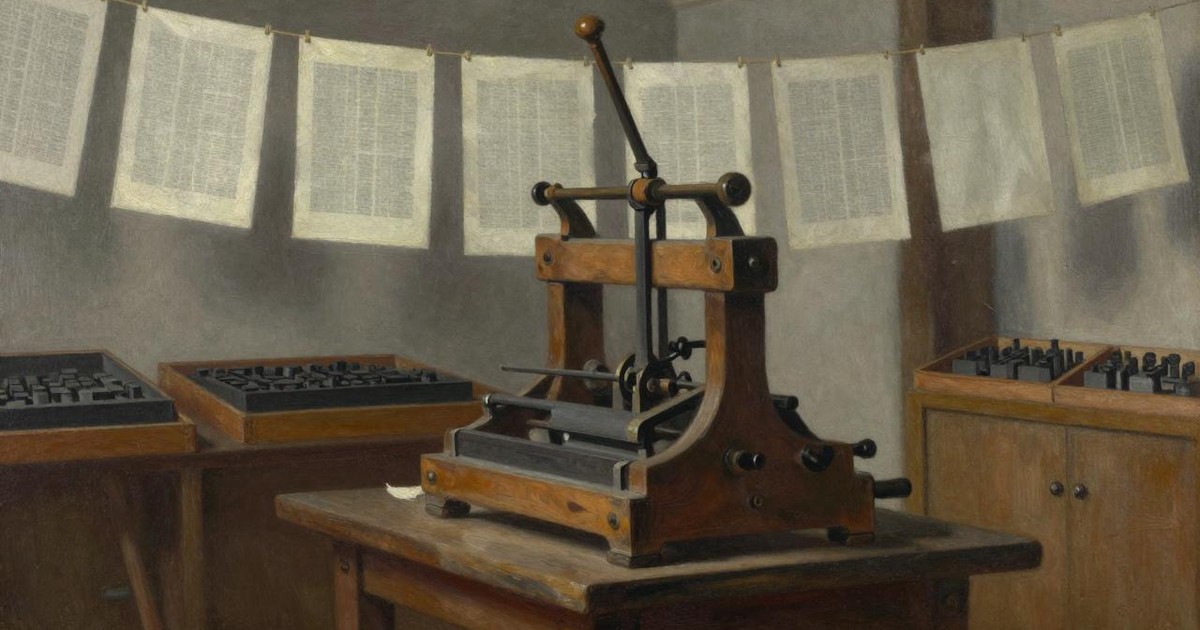
Language is the medium every other question passes through, which is why it is so easy to forget it is doing work. You think you are talking about power, or death, or justice, but you have already made assumptions about what words mean, what counts as evidence, whether the category you are using carves the world at its joints. The philosophy of language is not a technical sub-department. It is the foundation that keeps showing up under your feet.
The classical treatments set a standard the present rarely meets. Wittgenstein argued that meaning is use, that words get their life from how they move through a form of life rather than from definitions you could look up. When he said the limits of my language are the limits of my world, he was not being poetic. He was saying that if you do not have a word for a phenomenon, you will struggle to name it when you see it, and if you cannot name it, you will treat it as less real than things that are named. Quine later dismantled the analytic-synthetic distinction, the idea that some statements are true by meaning alone while others are true by fact, showing instead that our beliefs form a web that adjusts holistically when a prediction fails. Derrida pushed in another direction, arguing that meaning is always deferred, that you chase the definition of a word until it refers to other words, and the ground you expected under your feet is never quite there.
Those arguments did not go away. They moved into the infrastructure. The present does not debate them in seminars; it implements them, and the implementation changes what we can notice. Algorithms sort language by predicted engagement rather than truth value. Search engines return results that optimize for clicks rather than accuracy. Large language models generate text that mimics meaning without understanding anything. In each case, the question of what words mean is outsourced to systems that are not asking permission to decide. The philosophical argument has become the product specification.
That is the pressure point this topic collects. The old arguments about what language does are not historical curiosities here. They are diagnostic tools for conditions that were invented after the philosophers wrote. Wittgenstein's language games anticipated how platforms would create rules for what counts as speech and what gets silenced. Quine's holistic web describes how misinformation spreads when you cannot correct one belief without adjusting the entire network of connected beliefs. Derrida's deferral of meaning describes what happens when meaning is indexed rather than understood, when a word becomes a link to other words rather than a grasp on something outside the text.

This topic page collects the essays on the site where language and meaning are the engine rather than the assumed background. The methods vary by column. A Then & Now piece pairs an old argument about language with the present condition that tests it. The Objection might steelman a claim about truth or reference and then run the counter. Deep Cuts can follow a single linguistic question through the length it needs. Reviews enter this topic when the work under review is itself about the machinery of language, a novel or film that stages meaning as the subject rather than the tool.
There is a failure mode in writing about language that deserves explicit naming here, because it is nearly unavoidable and this topic's essays try to avoid it anyway. The pedant version: meaning is fixed by dictionary definitions, deviations are errors, correct usage is moral. This is not analysis, it is gatekeeping dressed as precision. Language changes by definition, and policing boundaries serves whoever controls the gate, not whoever speaks.
The opposite failure is the relativist version: meaning is whatever anyone says it is, all interpretations are equal, done. This is also a shortcut. It is easier to dissolve the concept than to do the work of distinguishing when language is being used clearly and when it is being used to evade. The essays here try to hold both positions: meaning is flexible by nature, but some uses are more honest than others.
A specific overlap worth flagging: this topic crosses deeply into Mind & Knowledge, because what counts as knowledge depends on what language can carry. If words only refer to other words, how do we attach them to the world? If language is use, how do we coordinate what counts as evidence? Another crossing runs into Science & Technology whenever the algorithm sorts language for profit, turning words into data points. A third runs into Power & Politics, because controlling what can be said controls what can be thought, and the history of censorship is the history of language policy.
The archive below is where this stands now, zero essays toward a target of six. The gap is real, and the plan is to close it, because a site that takes philosophy seriously cannot leave this department empty indefinitely. Candidates are not scarce. The surveillance of language by platforms. The generation of meaning by machines. The question of whether truth has a definition that survives the language games we are playing. The tradition is long, the present is loud, and the essays to be written sit at the intersection of the two.