Art & Beauty
Why art still matters, and what beauty is actually for.
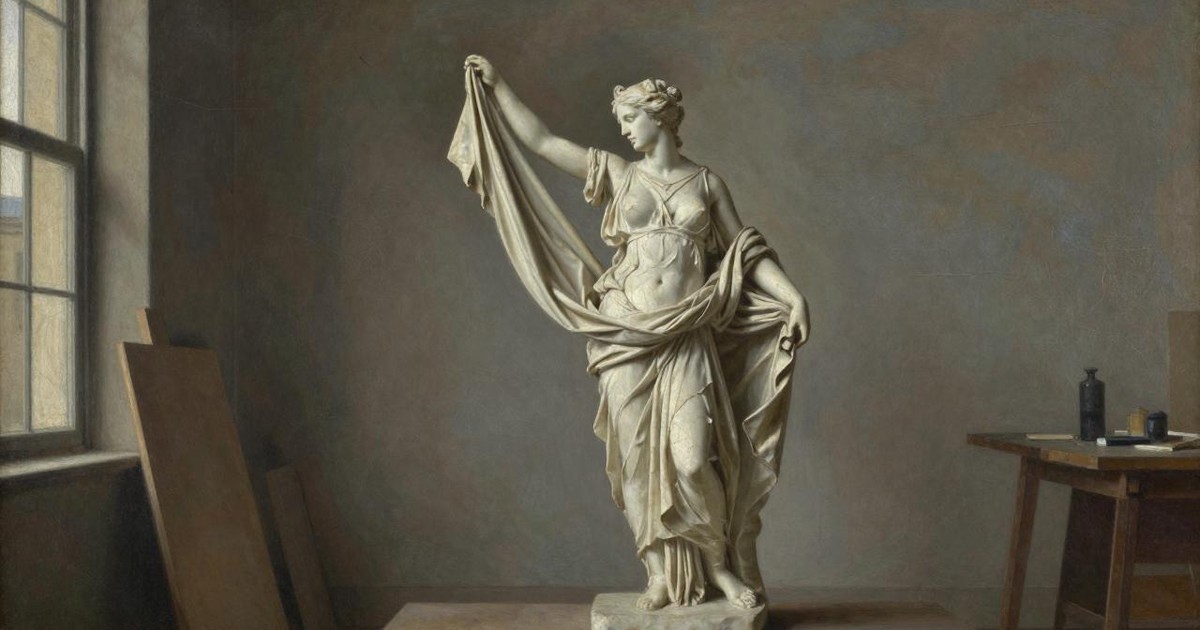
Beauty is the topic philosophy most regularly promises to deal with and then quietly drops. Aesthetics as a discipline exists, with a respectable literature running from Baumgarten through Kant to the present, but the subject has a way of slipping to the margins of serious attention, treated as a luxury department: pleasant to visit, nothing urgent inside. That marginal status is itself the thing this topic examines. A culture that treats beauty as decoration is making a philosophical claim, whether it knows it or not, and the claim deserves examination more than the decor does.
The old treatments took the question seriously in a way that can still surprise. Plato distrusted the artists enough to patrol them in the Republic, but the suspicion was grounded: art operates on the soul at a level below argument, and anything with that kind of power warranted supervision. Kant located beauty in a peculiar judgment that is neither purely subjective nor objectively provable, the famous claim that when you call something beautiful you speak as if the whole world ought to agree, while having no grounds to enforce the ought. Hegel thought art was one of the ways spirit came to know itself, and then predicted, in effect, that it would eventually be superseded by more adequate forms: art would end, not by disappearing but by ceasing to be the primary vehicle of truth. Whether that happened is an open question that the present century keeps inadvertently answering.
The moderns did not relax the question; they weaponized it. Benjamin asked what happens to the aura of a work when mechanical reproduction makes copies ubiquitous, and the question has since been republished, without his name attached, every time a new technology multiplied the reproductions. Adorno and the Frankfurt School inherited Debord's neighborhood: the argument that mass culture produces a managed pseudo-world, pleasure administered until it stops working as pleasure. Debord himself gave this topic its sharpest present-day hinge: the society of the spectacle, in which social life has been organized around appearance over being, relations between images replacing relations between people. He wrote it in 1967 about television. He could not have described the influencer economy more precisely if he had seen it.
That is the present pressure on this topic. The spectacle became infrastructure. The curated image stopped being a genre of art and became the default mode of appearing in public at all. Influence is now a profession with measurable yields, the performance of a life optimized for the audience watching it, and the labor is unpaid at the entry level and enormous at the top. What Benjamin called aura, the unique presence of the original, now sits on the other side of the transaction: the authentic is whatever cannot be reproduced, which makes the entire economy chase it into ever stranger corners of lifestyle content. The influencer's breakfast is staged for the camera that will validate it. The question of what art is doing in these conditions is not a niche question. The conditions are the question.
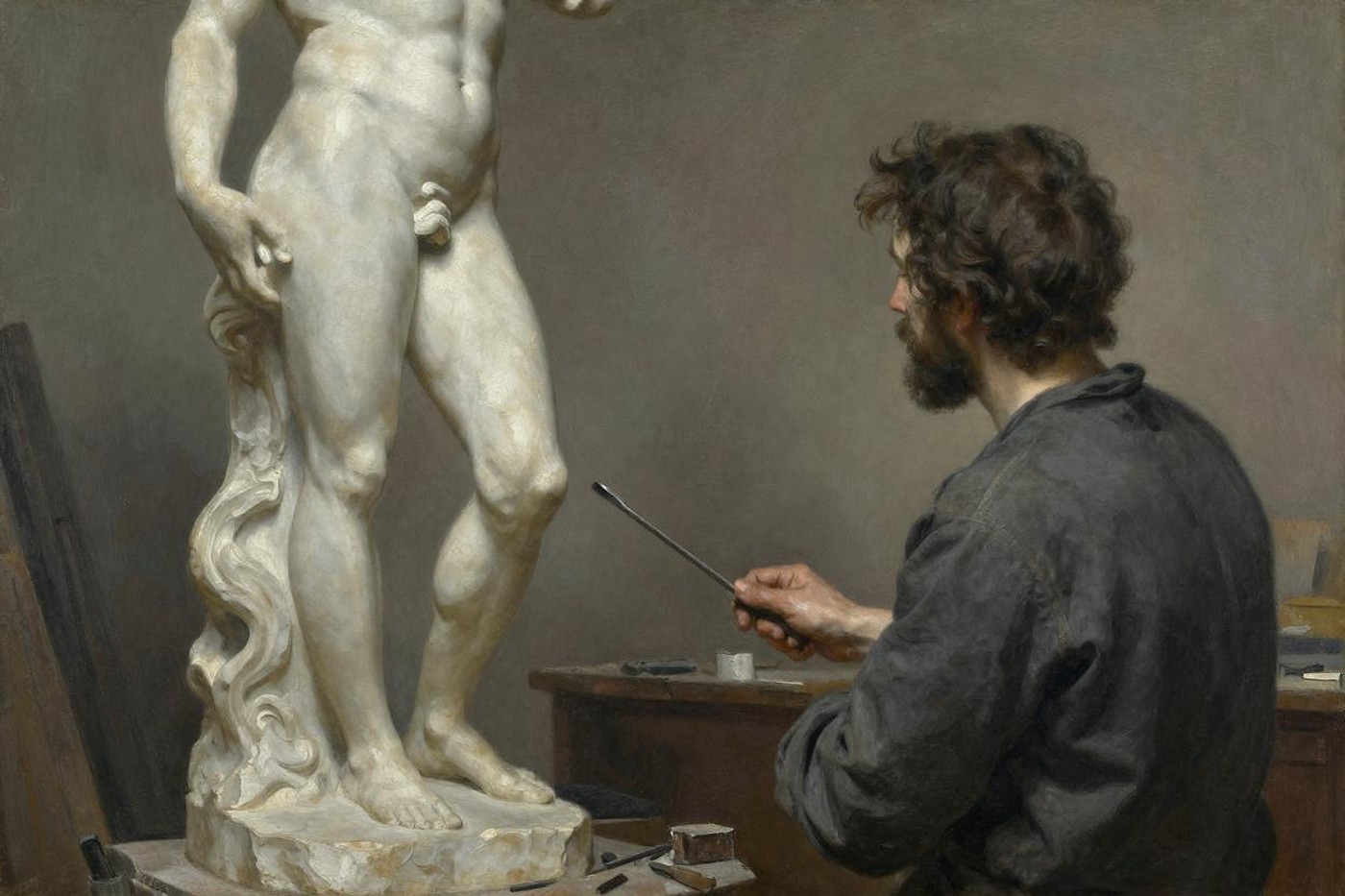
This topic page collects the essays on the site where art, beauty, and the spectacle are the engine rather than the illustration. The methods vary by column. A Then & Now piece pairs an old argument about the image with the present machinery that proves it. The Objection steelmans a claim about art or taste and then runs the counter. Deep Cuts follow a tradition through the length it needs, and aesthetics traditions are long. Reviews enter this topic whenever the work under review is itself a machine for producing beauty or examining it, which on this site so far means the novels that took their own construction seriously enough to earn scrutiny.
There is a failure mode in writing about art that deserves explicit naming here, because it is nearly unavoidable and this topic's essays try to avoid it anyway. The gatekeeper version: the critic's job is to certify what counts as real art and dismiss the rest, taste enforced as class boundary. The problems with this are well documented, but the deeper issue is that gatekeeping substitutes for the actual work, which is saying what the object is doing. Declaring something serious is not analysis. Declaring it garbage is not analysis either.
The opposite failure is the celebration version: all cultural production is valid, the audience's enjoyment is the complete account, done. This is generosity deployed as avoidance. It refuses the distinction between craft and accident, effort and churn, and the refusal costs something real, because the distinction exists and people use it every day in every domain except the one where they have been trained to feel rude for noticing it. The essays here try to hold the ground between the two failures, which is where the actual criticism lives: what is this thing doing, how does it do it, and what does it cost to accept it.
A specific overlap worth flagging: this topic crosses Science & Technology whenever the image becomes a technical artifact, which is now permanent. Synthetic media makes Benjamin's question urgent again from the other direction: when anything can be generated, the category of the original loses its work, and beauty attaches to whatever the viewer cannot yet reproduce. Another crossing runs into Power & Politics through the spectacle, because Debord's insight was always political at the root: the image-world is not a distraction from the organization of power, it is one of its instruments. A third runs into Religion & the Sacred, because the experience people describe in front of great art uses the same vocabulary as the experiences the sacred has always claimed, and the overlap is not coincidental. Art, beauty, and worship have been entangled since before anyone sorted them into separate departments.
The archive below is where this stands now, one essay toward a target of seven. The count is honest: the spectacle essay carries this tag alongside Power & Politics, and no other current essay centers art. The gap is real and the target implies the plan is to close it, because a site that takes appearances seriously cannot leave the aesthetics department empty indefinitely. Candidates are not scarce. The aura of the deepfake. The aesthetics of the feed. The question of whether algorithmic curation is taste. The tradition is long, the present is loud, and the essays to be written sit at the intersection of the two.