The Spectacle Doesn't Need a Stage
Debord argued society had organized itself around appearance over being. Influencer culture is unpaid performance labor.
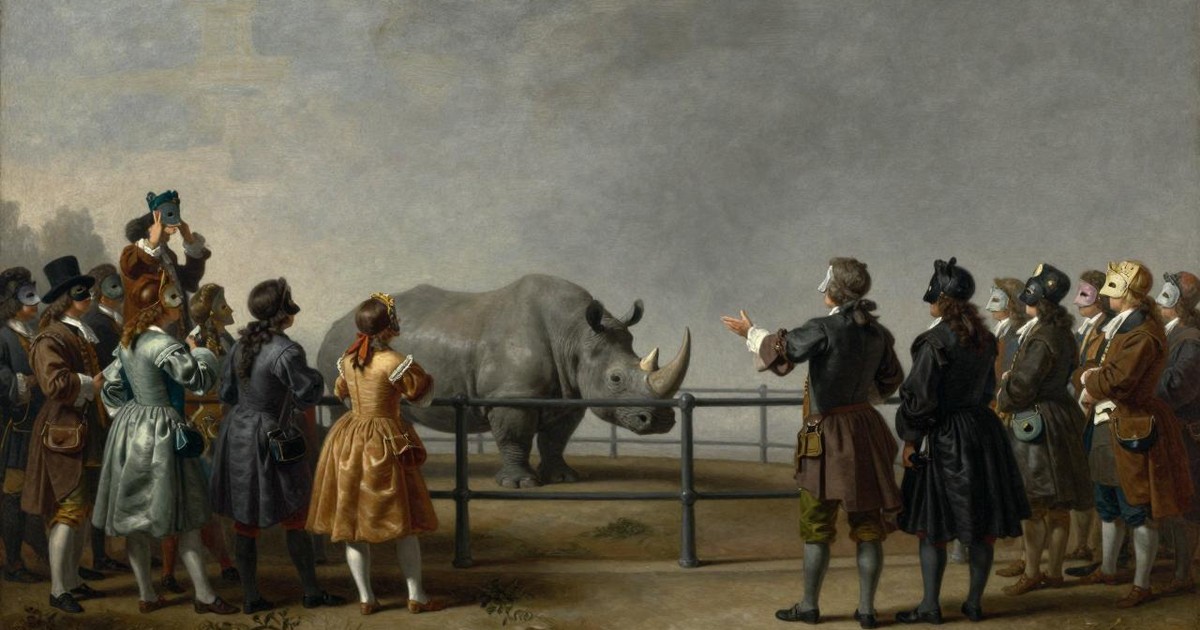
In 1967, a French situationist named Guy Debord published a short book composed almost entirely of numbered paragraphs, each one reading like a laws-of-physics pronouncement about television. It was called The Society of the Spectacle, and its central thesis can be stated plainly: modern capitalism had reached a stage where images had become the primary commodity. Not advertisements for things. The images themselves were the thing, and social life had reorganized itself around their production and consumption. "All that once was directly lived," ran the most famous sentence, "has moved away into a representation."
Debord's France was a country with three or four television channels, state-run, broadcasting to a nation of spectators. The spectacle, in his telling, was the mediator between people who no longer met each other directly. Workers produced goods they never saw used, consumed images of lives they never lived, and gathered around screens as their common experience. Commodity production had expanded from factories to consciousness itself. The spectacle was not a set of images, he insisted, but a social relation between people mediated by images.
He wrote as a prophet of total defeat. The spectacle could not be reformed, only refused, and his program for refusal consisted of detournement: hijacking the spectacle's own images and turning them against it, a cut-up politics of prank and inversion. The May 1968 revolts borrowed his slogans, painted them on walls, achieved a brief carnival of direct life, and lost. Debord spent his remaining decades drinking, making films nobody watched, playing military strategy games, and issuing occasional bulletins confirming that everything had gotten worse, which by his lights it had.
Part II: Separation perfected
The mechanism at the center of the book deserves a slower reading, because it is the part that turned out to be portable.
The spectacle begins, Debord argued, in separation. A worker separated from the product of his labor, a citizen separated from political power, neighbors separated from each other by the arrangement of cities and cars and televisions. Each separation creates a need, and the need is answered with an image. The image of the good life arrives precisely because the good life is not available. The spectacle is "capital accumulated to the point that it becomes image," and its function is to fill the hole its own existence digs.
Notice the circularity, because it is the engine of the whole system. The image is manufactured out of the absence it pretends to resolve. Watch the advertisement for leisure and you will spend the evening earning the money to afford the vacation in the advertisement. Consume the representation of connection during the commute that separates you from everyone you would connect with. The spectacle does not lie, exactly. It mediates, and by mediating, it makes direct experience progressively unnecessary, then unavailable, then unimaginable. Separation accumulates, and each accumulation is sold back to the separated as lifestyle.
This was, remember, the diagnosis of a society with broadcast television. One screen per household, a handful of channels, and the spectacle already appeared to have colonized everyday life completely. Debord died in 1994, by his own hand, in a farmhouse in the Auvergne, shortly after completing a film about his own life assembled from existing footage. He did not see what came next. He did not need to. Near the end of his life he remarked that his old theses had aged better than he expected, because the spectacle had continued along its trajectory. He underestimated only the direction the cameras would face.
Part III: Everyone broadcasts now
The transformation Debord did not live to catalogue is this: the spectator became the performer, and the performance became labor.
Begin with the numbers, in the abstract. A substantial share of a typical young person's waking attention is spent inside feeds composed substantially of content produced by other ordinary people, not studios. Some fraction of those producers earns money at it. A larger fraction performs for free in the vague hope of becoming the fraction that earns money. The largest fraction produces content neither for money nor for the hope of it, but simply because social existence now includes an expected stream of self-documentation. The vacation photographs that prove relaxation, the plate photographed before eating, the concert glimpsed through the raised phone, the workout logged, the relationship announced, the grief posted.
Take Debord's categories across that landscape and watch them lock into place. Separation: people physically alone more often than any prior generation, connecting through the mediation of platforms. Mediation: friendship conducted through likes and comments, romance through profiles and messages, each interface owned by a company whose revenue depends on the mediation continuing. The image as commodity: attention bought and sold on auction platforms in real time, with the user's image production as the raw material that draws the eyes, and the eyes as the product sold to advertisers.
But something new has been added, something Debord's framework strains to contain, and it is the arrival of the performance obligation. In broadcast television, the spectacle had stars, and stars were professionals hired by networks. The spectators watched. That division of labor is gone. The platform's genius was to recruit the audience as unpaid cast. Every user is a micro-studio: producing, editing, distributing, and promoting content, for no wage, with the chance of exposure held out as compensation. The vacation photo is not a record of the vacation. It is an episode of the ongoing show of the vacationer, produced during the vacation at the vacation's expense. The meal is documented before it is eaten because the documentation is now part of the meal's function. Experience, as Debord feared, has migrated into representation. But the migration has been democratized, and the labor of representation has been distributed across everyone performing it.
Consider the influencer, the purest case. A person whose profession is the production of their own image, whose income derives from advertisers renting space in the continuity of that image, whose workday consists of arranging reality so that it photographs well. Debord would recognize the job instantly and could have written the description: the commodity achieving consciousness and taking selfies. But note the followers too, the amateurs, and the strange economy among them. A follower performing admiration is often also a producer seeking an audience, whose admiration is itself a bid for reciprocity, a promotional technique dressed as a social bond. Everyone on stage, everyone in the audience, everyone working, no one paid.
That last sentence is the point this essay exists to make. Debord's spectators were exploited in the classic way: their attention was harvested and sold. The contemporary participants in the spectacle are exploited twice. Attention harvested, and image production extracted, uncompensated, at scale, marketed to the producers as opportunity, community, self-expression. The factory, having absorbed the image, absorbed the worker's leisure time and social life as additional shifts. Influencer culture is not a subculture of narcissists. It is the labor relations of the spectacle made visible: unpaid performance labor, with the lucky performers occasionally permitted to eat.
Part IV: The warm stage
The strongest objection to all this is not that the analysis is wrong but that the tone is, and it deserves a fair hearing before the end.
Debord wrote from contempt for ordinary life and dressed the contempt as radicalism. The situationist refusal of the spectacle was available only to those with the leisure, education, and temperament to make refusal their project. Ordinary people, offered the spectacle, took it, and generally report preferring their situation to his. A grandmother in another country watching her grandchildren grow up through a screen is not separated by that screen; she is connected by it, in a way geography once made impossible. Communities organize around shared marginal experiences, find each other through the mediation, and build real support from it. Small artists reach audiences no gallery would ever have shown them to. The mediation cuts both directions, and a theory that can only see the loss half is a theory with a blind spot and a snobbery.
And the performance, considered as craft, is not nothing. Producing a coherent self in public, under observation, over years, develops real skills: editing, framing, timing, tone, reading an audience. The claim that everyone was happier before the cameras turned around needs evidence it does not have, and the nostalgia on offer is usually for an imagined past that excluded plenty of people from whatever direct life it contained.
Perhaps, then, the spectacle is simply a medium, neutral like print or electricity, and Debord was just a man angry at television with a gift for aphorism.
But keep two facts in view while weighing that. The platforms mediating all this connection are engineered by companies whose revenue depends on maximizing time spent, and the optimization does not pause to distinguish connection from compulsion. And the performers, professional and amateur alike, report at striking rates that the performance exhausts them, that the gap between the image and the life produces a specific unhappiness, felt most by those most successful at the performance. The wageless cast speaks of burnout in the vocabulary of labor, because it is labor. Debord named the condition of a society organized around appearance rather than being. He did not predict that the appearance would require a workday, but the workday is here, disguised as life.
The spectacle no longer needs a stage because everyone carries one, and the ticket price is charged in hours. Debord recommended refusing it entirely, which was possible for him, on a farm, with royalties. The remaining question, for those of us mid-performance, is narrower and harder: whether a mediated life can be lived deliberately, or whether deliberateness itself is just content now.
Answer as you see fit. The camera is running either way.
Related topic: Science & Technology.
Further Reading
The Cage You’d Choose
La Boétie on voluntary servitude, and the cage that advertises itself as liberation.
La Boétie on voluntary servitude, and the cage that advertises itself as liberation.
The Tyranny of “You Can”
Byung-Chul Han on the burnout society, where freedom itself becomes the boss.
Byung-Chul Han on the burnout society, where freedom itself becomes the boss.