"So it goes." Kurt Vonnegut repeats the phrase somewhere around a hundred times across Slaughterhouse-Five, after every single death the novel mentions, and the phrase does something no repeated tic in a lesser novel would manage: it accumulates meaning by refusing to change. A goldfish dies, so it goes. Champagne goes flat, so it goes. A hundred and thirty thousand people burn to death in the firebombing of Dresden, so it goes. The device is usually read, correctly as far as it goes, as black comedy, a deadpan refusal to dignify catastrophe with the emotional register catastrophe seems to demand. But the phrase is doing real philosophical work, not just tonal work, and the novel only makes full sense once you take that work seriously: "so it goes" is Vonnegut's shorthand for the metaphysics of his alien Tralfamadorians, who perceive all of time simultaneously, the way a human perceives a mountain range, and who have therefore concluded that death is not an ending, only a bad moment in a person's shape that exists permanently, unchangingly, at every other moment of that shape too. When a Tralfamadorian is asked whether their society has wars, the answer is essentially: of course, and one of us will die in one someday, so it goes, and there's no more to be done about it than there is to be done about a bad day in April.
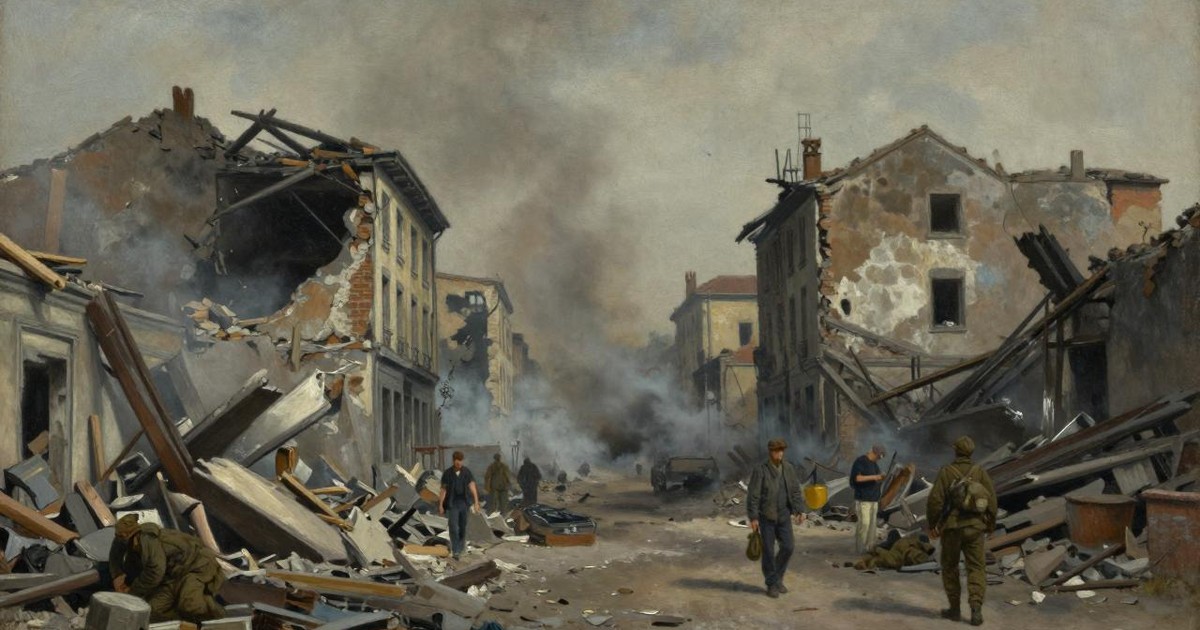
Billy Pilgrim, the novel's chronically displaced protagonist, absorbs this philosophy after his abduction by Tralfamadorians and it becomes, by the novel's own telling, the thing that lets him survive the unbearable: having watched Dresden, the city he was a POW in, get firebombed into a corpse-mine by Allied forces in February 1945 — a historical event Vonnegut himself survived as a prisoner of war, sheltered in an underground meat locker literally named Slaughterhouse-Five — Billy adopts a worldview in which nothing needs to be mourned as gone, because in the Tralfamadorian scheme nothing is ever gone; every moment simply exists, always, at its own point in the four-dimensional structure of time, and free will is an illusion humans cling to because we can only see one moment at a time, like a person looking through a length of pipe.
This is where the novel becomes an actual argument rather than a survivor's memoir with jokes in it, and it's worth taking that argument as seriously as Vonnegut, by his own account, intended it. Fatalism of the Tralfamadorian variety is not merely a coping mechanism dramatized inside a plot; it is a coherent, if bleak, position in the free will debate, structurally similar to what philosophers call the "block universe" view associated with eternalism in physics — the idea, taken seriously by working physicists since Einstein's relativity undermined a universal simultaneous "now," that past, present, and future are all equally real, that nothing is uniquely privileged as "happening" right now, and that the feeling of time flowing, of choices mattering as they're made, is a feature of limited human perception rather than a feature of reality itself. Vonnegut, a self-described humanist who was famously suspicious of easy comfort, does not let the reader mistake this for a happy philosophy. The Tralfamadorians tell Billy, without apparent malice but also without apparent concern, that the universe will eventually be destroyed by one of their own test pilots experimenting with a new fuel, and that they know this, have always known this, and do nothing to stop it, because "structure of the moment" doesn't permit intervention — a moment simply is what it is, permanently, and always has been. If time is a fixed structure rather than a live unfolding, choice in any meaningful sense evaporates, and the Tralfamadorians have made an uneasy peace with that evaporation that the novel asks you to weigh rather than simply adopt.
Is this fatalism, taken as a serious position rather than a wartime coping fantasy, actually defensible, or does the novel quietly undercut it? This is the question a review owes the book, rather than treating "so it goes" as merely a stylistic flourish worth admiring for its economy. The strongest case that Vonnegut means the fatalism sincerely, at least provisionally, is structural: the novel itself is written the way a Tralfamadorian novel would be written, according to the aliens' own description of their literature — "there is no beginning, no middle, no end, no suspense, no moral, no causes, no effects," just clumps of message that "produce an image of life that is beautiful and surprising and deep," read all at once rather than sequentially. Slaughterhouse-Five is structured exactly this way: it jumps nonlinearly across Billy's whole life, before the war, during the war, after the war, on Tralfamadore, without transitions signaling which moment is "now," because in the metaphysics the book has adopted, no moment is more "now" than any other. Vonnegut isn't just describing fatalism through Billy's borrowed alien philosophy; he's built the book's own form to enact it, which is a stronger authorial commitment than most novels make to a worldview they're only pretending to endorse for the sake of a character.
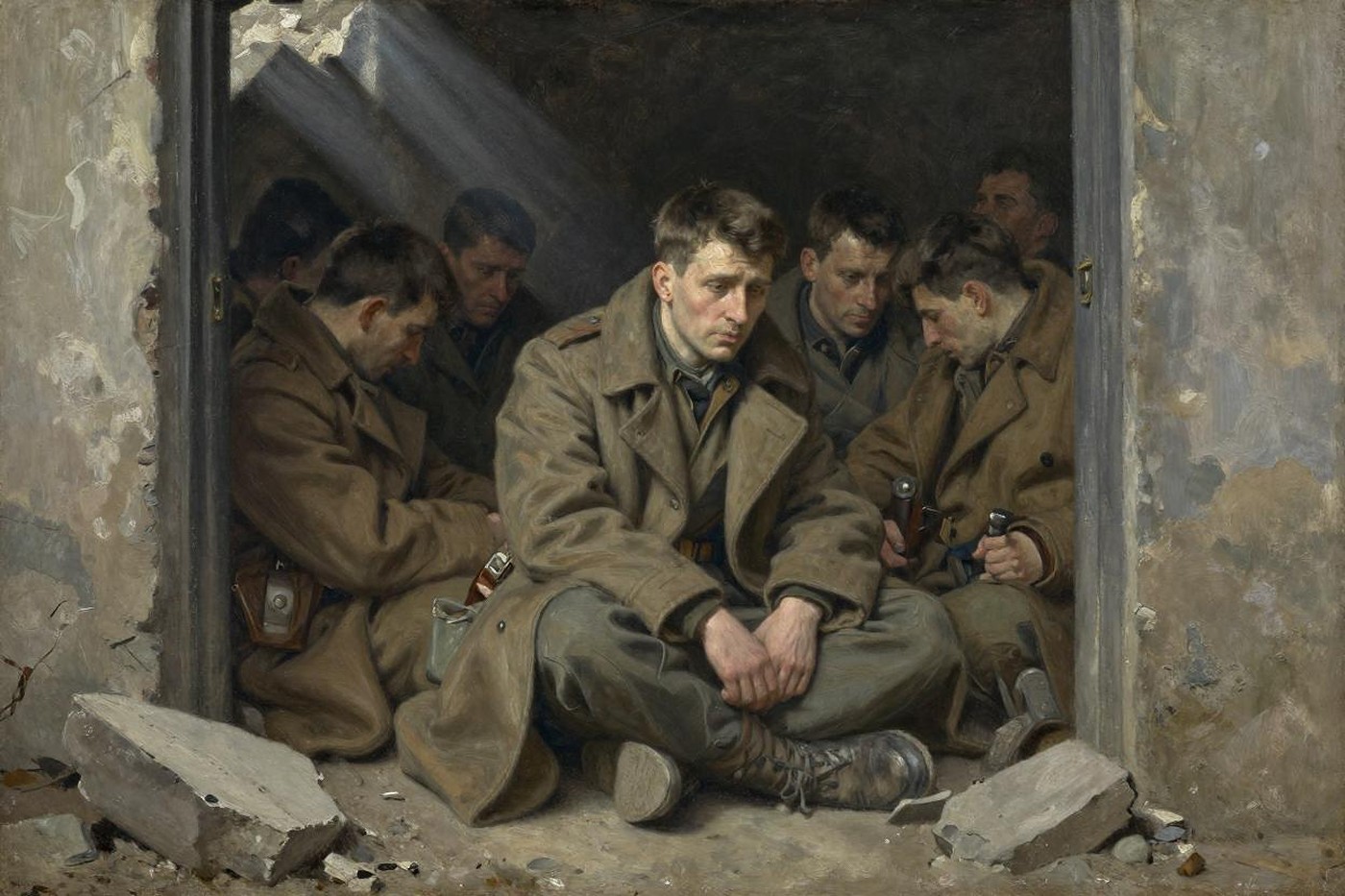
And yet the novel does not, in the end, let fatalism win cleanly, and this is the crucial move that keeps Slaughterhouse-Five from collapsing into nihilism dressed as wisdom. Vonnegut breaks his own frame repeatedly. The book opens and closes in his own authorial voice, not Billy's, insisting "I was there" about Dresden in a way the Tralfamadorian aliens, who claim no moment matters more than another, would have no reason to insist on. He tells us early on that he promised his war buddy's wife, Mary O'Hare, he wouldn't glorify war or let Frank Sinatra and John Wayne play the soldiers in some future movie version — a promise that only makes sense if some things do matter more than others, if a book can do actual ethical damage by getting war wrong, which is a claim fatalism has no room for. And the novel is relentless, in its quiet way, about assigning blame precisely where a true Tralfamadorian would refuse to: it names Dresden as a war crime in everything but explicit language, lingers on the corpse mines with a specificity that "so it goes" cannot fully anesthetize, and gives us Edgar Derby, a decent, middle-aged soldier shot by a firing squad for looting a teapot from the ruins of a city that Allied bombers had just destroyed with far greater theft and far greater violence, a scene of such calibrated, absurd injustice that no fatalist shrug survives contact with it. "So it goes" gets repeated after Derby's death like every other death in the book, and by that point in the novel the phrase has stopped sounding like acceptance and started sounding like something closer to its opposite — a wound so large the only way to keep narrating through it is to refuse the phrase any room to swell into the scream it's actually covering for.
That tension, between a philosophy of total acceptance and a book that keeps flinching from its own philosophy at the exact moments that matter most, is not a flaw in Slaughterhouse-Five. It is the argument, fully realized rather than merely asserted: fatalism about time and free will might be metaphysically coherent, might even be, as the physicists' block universe suggests, closer to how reality actually works than our felt sense of an open, choosable future — and it is still, Vonnegut insists through the sheer discipline of what he refuses to let "so it goes" paper over, an inadequate response to Dresden, to Edgar Derby, to a hundred and thirty thousand civilians killed for reasons that remain, even decades of historical argument later, difficult to justify by any military necessity. The novel takes fatalism seriously enough to build itself entirely out of its logic, and then, without ever formally repudiating that logic, shows you exactly where a human being with a promise to keep to a friend's widow has to stand outside it anyway. Judged as a philosophical position dramatized rather than merely mentioned, "so it goes" survives the book's own test of it: coherent, uncomfortable, and, in the end, not quite believed by the one man in the novel who has the standing to say so.