Reviews / Mind & Knowledge
Till This Moment I Never Knew Myself
Jane Austen first called her novel First Impressions. Read beside a swipe, Pride and Prejudice is the sharpest account we have of why a quick look feels like knowledge, and of who it fools worst.
Mind & Knowledge · 10 min read
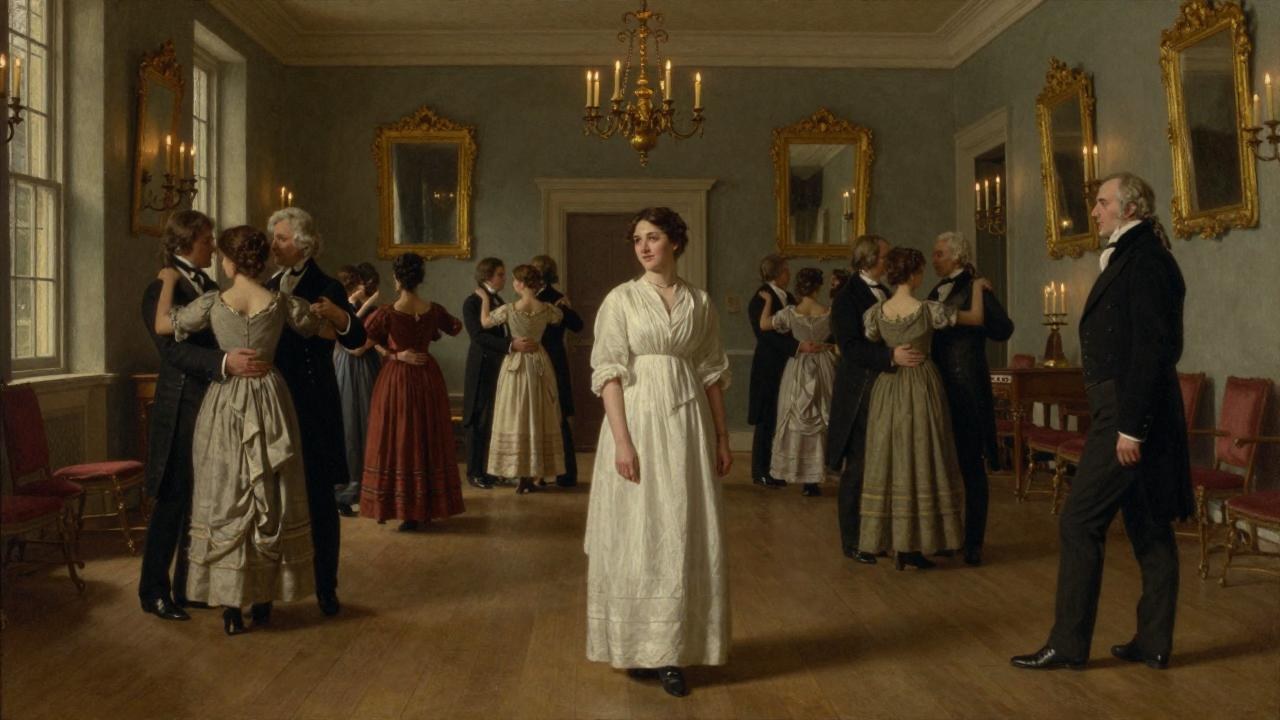
Jane Austen drafted the novel we know as Pride and Prejudice in 1796 and 1797, when she was barely in her twenties, and called it First Impressions. Her father offered it to the London publisher Thomas Cadell in 1797, and Cadell declined it without looking at it. Thomas Egerton published it, retitled, on 28 January 1813. The first title is easy to treat as trivia. It is better read as the argument of the book, and Austen kept the argument when she dropped the title.
How much can you know about someone from a first look? Austen's answer is that a first look gives you a confident verdict and very little knowledge, and that it deceives the person who prides herself on reading people most of all. That reads now like a description of a dating app, where a photograph, a job title and three favorite books produce a verdict in the time it takes to move a thumb. Three in ten American adults have used a dating site or app, the Pew Research Center reported in 2023, and among adults under 30 the figure was 53 percent. The cure the novel offers is time, evidence and the willingness to be humbled by both. On the diagnosis the book has aged as well as anything Austen wrote. Its cure has aged worse, and the reason is worth facing.
Part II: What does Elizabeth see at the first ball?
At the Meryton assembly the room makes up its mind about Darcy in minutes. Austen reports it with a straight face: "Mr. Darcy soon drew the attention of the room by his fine, tall person, handsome features, noble mien, and the report, which was in general circulation within five minutes after his entrance, of his having ten thousand a year." Look at what the room is judging: height, a face, a bearing and a rumor about money. Nothing on the list is character.
Then the verdict flips, just as quickly. Darcy "was looked at with great admiration for about half the evening, till his manners gave a disgust which turned the tide of his popularity." Nothing new was learned about him in that half evening. He was as proud at the start as at the end. His manners stopped flattering the room, and the room revised its judgment and felt just as sure of the new one.
Elizabeth Bennet thinks she is above this, and she is its best example. Sitting out a dance, she overhears Darcy turn down his friend's suggestion that he ask her: "She is tolerable: but not handsome enough to tempt me." It is a rude thing to say within earshot, and her pride has a real wound. When she decides, quickly and for good, that he is hateful, you sympathize. Her method is still the town's method. The town judged Darcy in five minutes from his height and his income. Elizabeth judges him in one evening from one overheard sentence. Both verdicts arrive at the speed of feeling, and both feel like knowledge.
Psychology later measured that speed. In 2006 the Princeton psychologists Janine Willis and Alexander Todorov showed people photographs of faces for a tenth of a second and asked them to rate traits such as trustworthiness, likeability and competence. The quick ratings closely matched those of people who could look as long as they liked, most strongly for trustworthiness. Longer looks, of half a second or a full second, did not change the judgments much. They made people more confident. The study measured agreement between judges, not whether anyone was right. Strangers agree about a face almost at once, and extra time mostly buys certainty. Meryton would have recognized the result.
Part III: Why does Wickham look so good?
Wickham arrives with his own first impression, and Austen writes it to answer Darcy's: "His appearance was greatly in his favour: he had all the best parts of beauty, a fine countenance, a good figure, and very pleasing address." Darcy's approval lasted half an evening. Wickham's lasts for months, because he does warmth easily and aims it at people who want to be charmed.
His method is simple, and the novel shows every step. He looks right. He tells Elizabeth, whom he has only just met, a story that confirms what she has already decided, that Darcy cheated him of a living promised by Darcy's father. She believes him at once. She asks for no proof, asks no one else, and does not stop to wonder why a man would tell a near stranger such a story on a first evening. The story also fits what she knows. Darcy did insult her. Darcy is proud. A man who did one unkind thing might have done another. The reasoning feels sound because it starts from something true and ends somewhere confident.
That is Austen's picture of self-deception. A flattering guess, tested by no one and confirmed by a handsome face, passes for a conclusion. Elizabeth trusts Wickham partly because trusting him lets her go on believing that her first impression of Darcy was discernment. Doubting Wickham would mean doubting herself.
Wickham's story is also exactly the size of a social post: one person's account of another, told attractively, impossible to check, taken in at a sitting. An ex described in two sentences becomes a villain. A screenshot settles an argument. You are Wickham's ideal listener whenever you accept a story because it arrived pleasantly and matched what you hoped was true.
Part IV: What does Darcy's letter teach her?
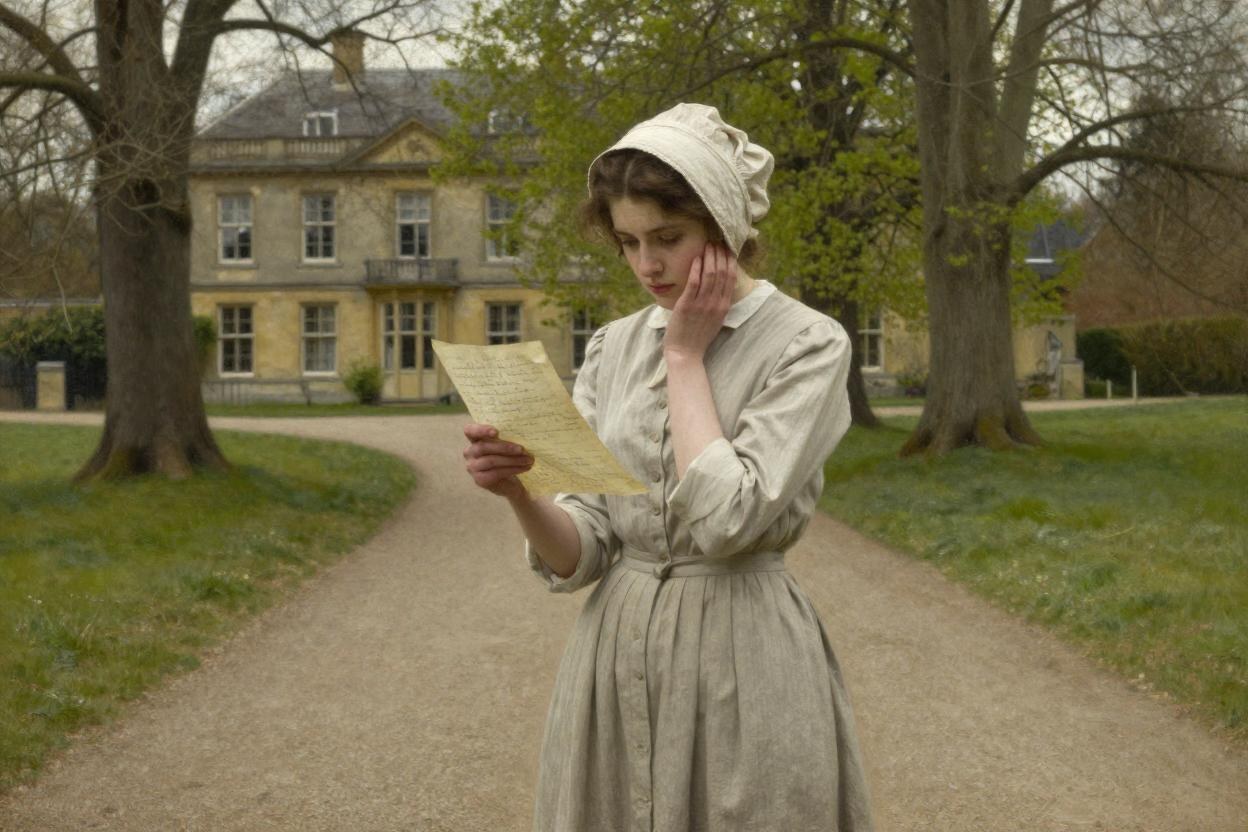
Darcy proposes, and he does it so badly, with so much plain contempt for her family mixed into the compliment, that she refuses him in anger. Then he does what nobody can do at a ball. He writes her a long letter. He does not argue that she should like him. He answers her charges one by one. On Wickham, the letter supplies the fact she never looked for. Wickham had tried to elope with Darcy's fifteen-year-old sister, Georgiana, for her fortune.
Elizabeth resists the letter at first, which is fair, since it is one more account from an interested party. What changes her mind is that she keeps rereading it and weighing it against what she has actually seen. Wickham's charm was real, and so was his habit of telling his grievance to anyone who would listen. Darcy's manners were bad, and nothing in his conduct she had witnessed matched Wickham's story. Time and attention do the work that one evening could not.
Her response is one of the great passages in English fiction, because its subject is Elizabeth herself. "How despicably have I acted!" she cries. Then comes the charge that hurts: "I, who have prided myself on my discernment! I, who have valued myself on my abilities!" She names the feeling that ran her judgment: "Had I been in love, I could not have been more wretchedly blind. But vanity, not love, has been my folly." And she ends with a sentence worth keeping for anyone who has ever been sure about a person: "Till this moment, I never knew myself."
Her instincts were not empty. Darcy really was proud, and Wickham really was a liar. What failed was her certainty, and Darcy shares the flaw. Earlier, at Netherfield, he had described his own temper to her: "My temper would perhaps be called resentful. My good opinion once lost is lost for ever." A first verdict, made permanent. The refused proposal is his lesson in the same subject.
The plot then tests what both have learned. Wickham runs off with Elizabeth's youngest sister, Lydia, and Darcy quietly pays to make him marry her. Elizabeth finds out and sees two men clearly at last: one who looked awful and acted well, one who looked perfect and acted terribly. Wickham never reforms, which keeps the novel honest. Reading people well matters for safety as much as for love.
Part V: Where does the novel's answer fall short, and where does it hold?
Austen's cure is time and evidence, and it is worth noticing who in the story can afford them. Elizabeth gets weeks of visits, letters, long dinners with the same small cast, and finally a tour of Darcy's estate with an aunt and uncle who ask the questions she cannot. At Pemberley the housekeeper, who has known Darcy since he was a boy, praises him without being asked. That is a great deal of evidence from people with nothing to gain. Very few people judge each other under those conditions now. An app is built to move you from photograph to verdict in seconds and to offer another face before doubt can set in. Austen diagnosed the habit exactly and prescribed a slow recovery that her heroine's leisure made possible and most readers' lives do not.
The ending also softens its own lesson. Elizabeth's correction is rewarded with a rich husband and a great house. When she first sees Pemberley, Austen admits that "at that moment she felt that to be mistress of Pemberley might be something," and readers have argued ever since about whether the house finished what the letter began. A modern reader has to separate two morals. The real one is that being humbled by your own bad judgment, and rebuilding your picture of a person from evidence, is how you come to know anyone, and it costs you some vanity. The marriage plot tells a cheerier story, in which the woman who learns her lesson gets rich. Self-correction does not pay out in houses. It pays out in not marrying a Wickham, and Lydia's marriage shows what that looks like.
Kept apart, the two halves leave the diagnosis standing. A face judged in a tenth of a second, a man judged in five minutes, confidence rising while accuracy stays put, and the cleverest person in the room fooled most thoroughly because her pride depends on being a good reader. That was Meryton in 1813, a Princeton lab in 2006 and a phone tonight. The prescription is real but costly. Time, repeated contact and facts you can check take hours that a quick-judgment culture does not hand you, so they have to be built deliberately, more slowly than the screen wants. And when the moment comes, you have to accept Elizabeth's sting, the discovery that you did not know yourself.
Questions readers ask
Why was Pride and Prejudice first called First Impressions?
Austen drafted it under that title in 1796 and 1797, and the title names the novel's subject: judgments made on a first meeting and the trouble they cause. She retitled it before Thomas Egerton published it on 28 January 1813.
What is the main message of Pride and Prejudice?
That quick judgments of other people feel like knowledge and often are not, and that correcting them takes evidence, time and the humility to admit you were wrong about yourself as well as about them.
Why does Elizabeth believe Wickham?
He is charming, and his story about Darcy confirms what she already wants to believe after Darcy insulted her. She never checks it until Darcy's letter gives her facts to weigh.
What is the famous first line of Pride and Prejudice?
"It is a truth universally acknowledged, that a single man in possession of a good fortune, must be in want of a wife." The line is ironic: the people most certain of it are the families with daughters to marry.
Related topics: Mind & Knowledge and Identity & Self. Part of the Reviews column.
Further Reading
The Case for Believing Without Evidence
The strongest case for faith beyond proof, and where it stops.
The Weaker Argument Always Wins Online
Aristophanes and a feed that rewards the argument that flatters the crowd.