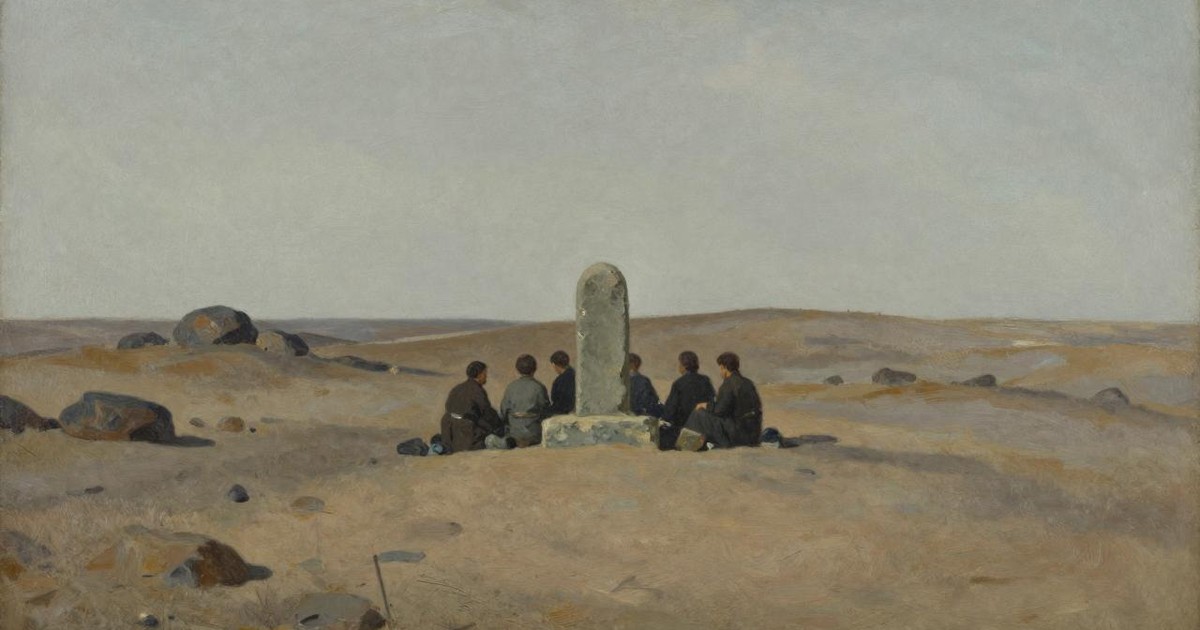
Ursula K. Le Guin subtitled The Dispossessed "An Ambiguous Utopia," and the word doing the real work in that phrase is not "utopia." It's "ambiguous." Most utopian fiction, going back to More's original coinage — a pun on the Greek for "good place" and "no place," meant to signal from the start that the two might be the same thing — presents its ideal society from a visitor's admiring distance, letting the reader marvel at institutions the author has designed to work. Le Guin does something more demanding: she builds a genuinely anarchist society, Anarres, run according to the philosophy of a woman named Odo who died generations before the novel begins, and then she puts a citizen of that society, the physicist Shevek, inside it closely enough, and for long enough, that its actual costs become visible from within, not just its ideals. The novel's structure alternates between Shevek's childhood and young adulthood on Anarres and his present-day visit to Urras, the wealthy, propertied, state-capitalist world Anarres's anarchist founders emigrated from two centuries earlier to escape. Each chapter set on one world comments on the chapter before it set on the other, and the effect is not "which world is better" but "what does each world's freedom actually cost, and who pays."
Anarres itself is the novel's real achievement, because Le Guin refuses the easy version of anarchist utopia where abolishing property and government simply dissolves human selfishness. There is no state on Anarres, no police, no prisons, no money, no private ownership beyond personal use-objects; work is organized through a rotating, computerized labor syndicate called PDC that assigns tasks based on need and preference rather than command; even language reflects the philosophy, with Pravic, the constructed tongue Odo's followers built for the settlement, structured to make possessive phrasing awkward — you don't say "my hand," you gesture toward "the hand." And yet Le Guin fills this ostensibly free society with exactly the coercions any honest anarchist thinker would predict emerge from a community that has abolished formal authority but not human nature: gossip functioning as social control more totalizing than any law, because there's no court to appeal to when your neighbors decide to freeze you out; a subtle but real hierarchy of prestige attached to certain kinds of "necessary" labor over others; Sabul, a physicist who uses his seniority and control over publication to steal credit from Shevek's work, demonstrating that abolishing property doesn't abolish the desire to hoard status; and, most damningly, the way the planet's founding revolutionary fervor has calcified, two hundred years on, into its own conformist orthodoxy, where deviation from Odonian principle is punished not by law but by something worse and less accountable — the informal, diffuse disapproval of a whole community that has convinced itself it has already achieved justice and therefore cannot be unjust.
This is where the "cost of freedom" question the novel is built to ask becomes precise rather than abstract. Freedom on Anarres is real and it is also expensive in a specific way: it requires constant, effortful maintenance against the human tendency to rebuild hierarchy informally once you've abolished it formally, and the novel's most devastating insight is that a society can convince itself this maintenance is no longer necessary — that having declared itself free once, it has become free permanently — and that self-satisfaction is precisely how the informal hierarchies creep back in unexamined. Shevek's physics, a unification of sequency and simultaneity that will eventually make instantaneous communication across space possible, is suppressed and stalled on Anarres not by any official ban but by the social pressure not to seem too individually ambitious, too attached to your own idea, too much like the egoizing Urrasti the revolution was fought against. The planet that prides itself on having no authority to censor Shevek's work censors it anyway, just through diffuse means that are harder to fight because there's no one office, no single villain, to petition or resist.
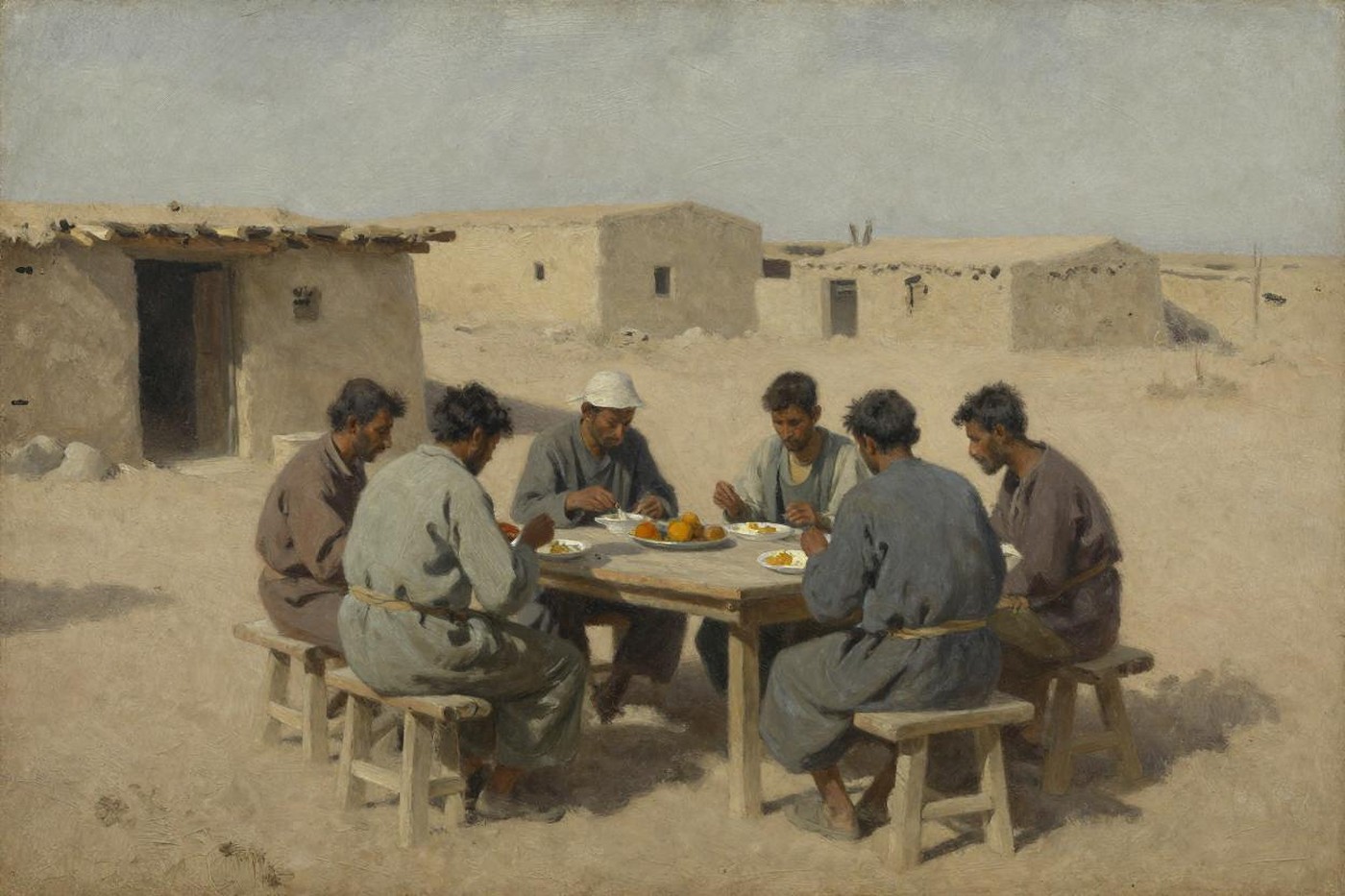
Urras, by contrast, is a lush, comfortable, deeply unequal world, split between the capitalist state of A-Io, which Shevek visits, and a rival state modeled loosely on Soviet communism that the novel treats with equal skepticism. A-Io gives Shevek everything Anarres's austerity denied him — private rooms, rich food, genuine scientific freedom and resources, admiring colleagues who don't punish ambition — and the seduction is real; Le Guin doesn't caricature Urras's appeal the way lesser utopian fiction caricatures its dystopian foil. But the price of that comfort is made visible the moment Shevek looks past his own treatment: A-Io runs on a permanent underclass, a colonized periphery it exploits for resources and labor, and a state apparatus willing to use lethal force against its own citizens the moment they organize, which Shevek witnesses directly when he wanders into a workers' protest that the state guns down in the street. The novel's argument, at its clearest, is that Urras's freedom for people like Shevek is subsidized by unfreedom for people the system has arranged to keep invisible to him, and that this is not incidental to prosperity of that kind but constitutive of it — the wealth has to come from somewhere, and where it comes from is always the same place: people with no leverage to refuse.
What makes The Dispossessed something more than a well-balanced pro-and-con exercise between two political systems is that it refuses to let either world claim final moral high ground, and it does this through Shevek himself rather than through authorial commentary. Shevek loves Anarres and returns to it at the novel's end, but not because the novel has proven Anarres superior; he returns because he has come to understand, through the humiliation and clarity of exile, that Anarres's freedom is a discipline that has to be actively re-chosen and re-practiced by every generation, not a settled achievement he can take for granted and criticize from comfort, the way he'd begun to before he left. The famous scene near the novel's end, where Shevek and a fellow physicist discuss walls — the wall around the Port of Anarres that, as a child, Shevek couldn't tell was there to keep people in or out, a distinction that turns out not to matter as much as whether you can see the wall at all — crystallizes the book's actual thesis: no society escapes the problem of walls, of constraint, of cost. What distinguishes a genuinely free society from an unfree one is not the absence of constraint but whether the constraint remains visible, contestable, and subject to the ongoing consent of the people living inside it, rather than naturalized into invisibility, whether that naturalization happens through law, through wealth, or — Anarres's specific danger — through the smug belief that a revolution once fought is a revolution permanently won.
Read as an argument about whether freedom requires responsibility to people you'll never meet, the novel's answer is unambiguous even where its utopia is not: Anarres's founding legitimacy rests entirely on solidarity extended to strangers — the willingness to do disaster relief labor during a famine two provinces away, to share resources with settlements you'll never visit, to trust that the syndicate system works because everyone is honoring an obligation to people outside their direct sight. The moment that solidarity frays, which the novel shows fraying during a famine subplot where local hoarding starts to override planetwide distribution, Anarres stops being meaningfully different from a society organized around self-interest; it just hasn't built the formal machinery of enforcement yet to hide that fact from itself. Judged on its own terms — does it demonstrate, rather than merely assert, that a stateless, propertyless society is a live option rather than a fantasy, and does it price that option honestly rather than selling it at a discount — The Dispossessed holds up as rigorously as any work of political philosophy committed to actual argument rather than wish fulfillment. It is not a blueprint. It is closer to a stress test, and the fact that Anarres passes the test only barely, only provisionally, and only through Shevek's exhausting, ongoing choice to keep passing it, is exactly what makes the novel's utopia earn the word ambiguous rather than merely wear it as a disclaimer.