Ask a child what job they want and there is a fair chance the answer involves an audience. In 2019 the toy company LEGO surveyed 3,000 children aged 8 to 12 in the United States, the United Kingdom and China. In the US and the UK, YouTuber or vlogger was the most popular answer, and astronaut was chosen by just over 10 percent. In China more than half of the children picked astronaut. In two of those three countries, the favorite was a job whose content is being watched, paid for by platforms that reward you for gathering eyes. Being seen has started to count as an achievement in its own right.
That makes an old question worth asking again. Does a good life need anyone to notice it? George Eliot, the pen name of Mary Ann Evans, gave the fullest answer in Middlemarch: A Study of Provincial Life, published in eight parts in 1871 and 1872. The novel follows ardent people in a fictional Midlands town in the years just before the Reform Act of 1832, people who meant to do great and visible things and mostly did not. Eliot refuses to call that failure in Dorothea Brooke's case. Her Finale argues that much of the good in the world comes from lives nobody records, and that our own decent circumstances are partly owed to them. The book is also honest about what that kind of life costs, and the honesty is what makes it worth arguing with now.
Part II: Who did Dorothea mean to become?
Eliot opens with a child who wanted to be seen by heaven itself. The Prelude introduces Saint Theresa of Avila as a girl, setting out hand in hand with her little brother to seek martyrdom in the country of the Moors. Then Eliot asks how many later Theresas found no epic life to live. "Here and there is born a Saint Theresa, foundress of nothing, whose loving heart-beats and sobs after an unattained goodness tremble off and are dispersed among hindrances, instead of centring in some long-recognizable deed." That sentence is the seed of the novel, and of Dorothea in particular.
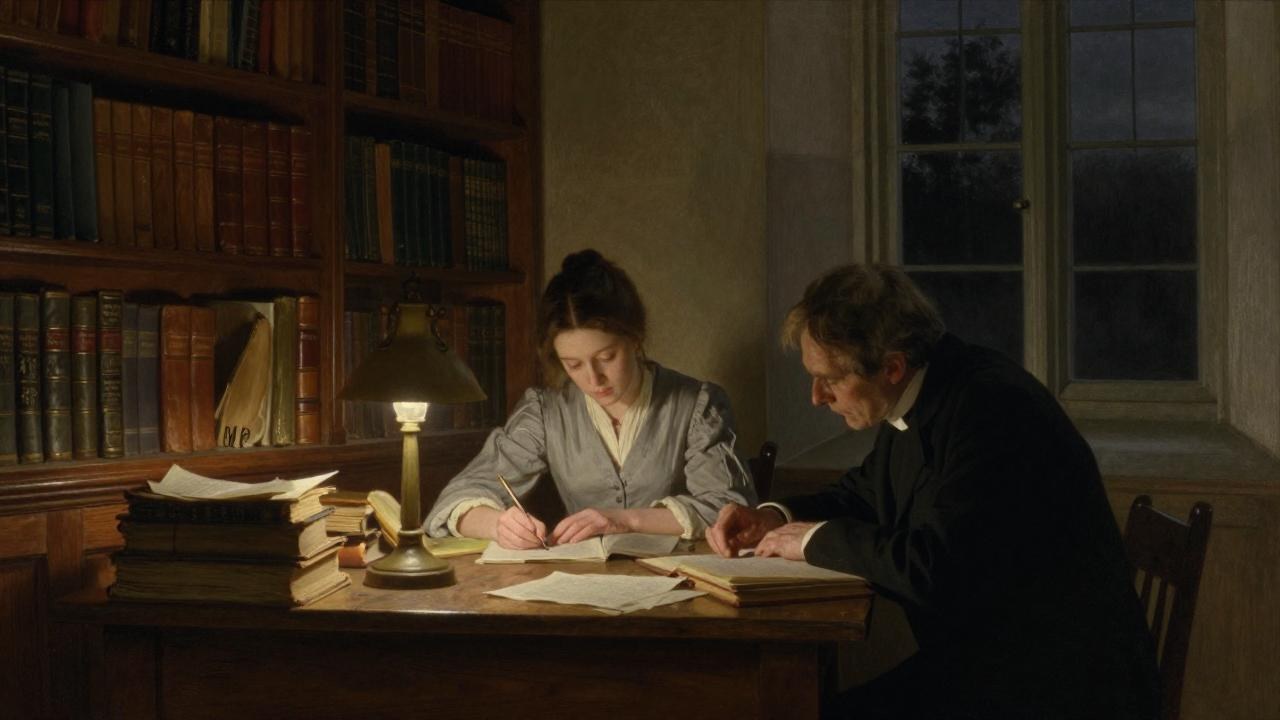
Dorothea Brooke is young, comfortably off and ardent past all sense. She wants a life of serious purpose, and she wants it badly enough to seize the first plausible form it takes. The form is Edward Casaubon, an older clergyman and scholar who has spent decades on a great work he calls the Key to all Mythologies. Dorothea marries him believing she will help him finish it. She pictures herself beside a great mind, learning his languages and sorting his sources. You can see the appeal even as you see the mistake. She has confused a large scholarly project with a large life.
The marriage goes wrong in a familiar and painful way. The work is dry, slow and endless, and Casaubon is as frightened of it as she is disappointed by it. Eliot marks the turning point in Dorothea's understanding with one of her coldest sentences. "We are all of us born in moral stupidity, taking the world as an udder to feed our supreme selves." Dorothea begins to climb out of that stupidity when she sees that her husband has a self as real and as needy as her own.
The Key is never finished. After Casaubon dies, a codicil to his will says that Dorothea loses his property if she marries Will Ladislaw, the younger man she has come to love. Even dead, he tries to govern her with money. She marries Will anyway and gives up the fortune. At no point does she shrink into resentment or treat a private life as a consolation prize. Her ardor survives the collapse of its first object and goes looking for another.
Part III: What happens to the great ambitions?
If Dorothea's story is about heat aimed at the wrong target, Tertius Lydgate's is about heat aimed well and then starved. Lydgate comes to Middlemarch as a young doctor who means to reform medical practice and make a scientific discovery. He has talent, training and a real plan, and Eliot lets you feel how real it is, which is why the collapse hurts. He marries Rosamond Vincy, the debts begin, and the research stops. By the Finale he has a prosperous practice, and he always thinks of himself as a failure, because he did not do what he once meant to do.
Lydgate's ambition was mixed from the start. He wanted to advance medical knowledge, and he wanted the name that comes with advancing it. When the research died, the name died with it, and by his own accounting little remained. A busy practice, an income, a family and patients helped every day count for almost nothing in his ledger, because he measured his life by the record it would leave. Eliot does not let circumstance take all the blame. Part of the trap was the measure he chose.
Dorothea and Lydgate make a useful pair. Both begin by wanting a name that will outlast them. Circumstance grinds both down into smaller lives than they imagined. Yet the Finale treats them very differently. Lydgate ends regarding himself as a failure. Dorothea lives a quiet married life, known mainly to the people around her, and Eliot describes that life with something close to reverence. Dorothea did not achieve more than Lydgate, and Eliot admits her gifts went into obscure places. What separates them is that Dorothea stopped needing the monument, and Lydgate never did.
Part IV: Why does Eliot end on unvisited tombs?
The last pages of Middlemarch turn from plot to a meditation on what to make of a life without public greatness. Eliot does not pretend that Dorothea became the reformer her early ardor promised. Instead she gives her an image. "Her full nature, like that river of which Cyrus broke the strength, spent itself in channels which had no great name on the earth." The allusion goes back to Herodotus. When the river Gyndes swept away one of the Persian king Cyrus's sacred horses, he punished it by dividing it into 360 small channels. That is what happened to Dorothea's force. It was split into hundreds of small courses, each useful and none famous.
Then Eliot names the result. "But the effect of her being on those around her was incalculably diffusive." Diffusive means spreading outward with no way to add it up. You cannot total Dorothea's contribution, because it never collects in one place. It moves through other people into further people, and the chain runs past all counting.
Much earlier, in chapter 20, with Dorothea weeping alone in Rome on her wedding journey, Eliot had explained why most of this spreading good goes unseen. "If we had a keen vision and feeling of all ordinary human life, it would be like hearing the grass grow and the squirrel's heart beat, and we should die of that roar which lies on the other side of silence." Ordinary life is a roar we are built to ignore. Most human suffering and most human goodness happen below the level of record, and if we perceived them fully we would be overwhelmed. So we do not perceive them, and then we conclude they were not there. A culture that measures worth by views makes that mistake on an industrial scale.
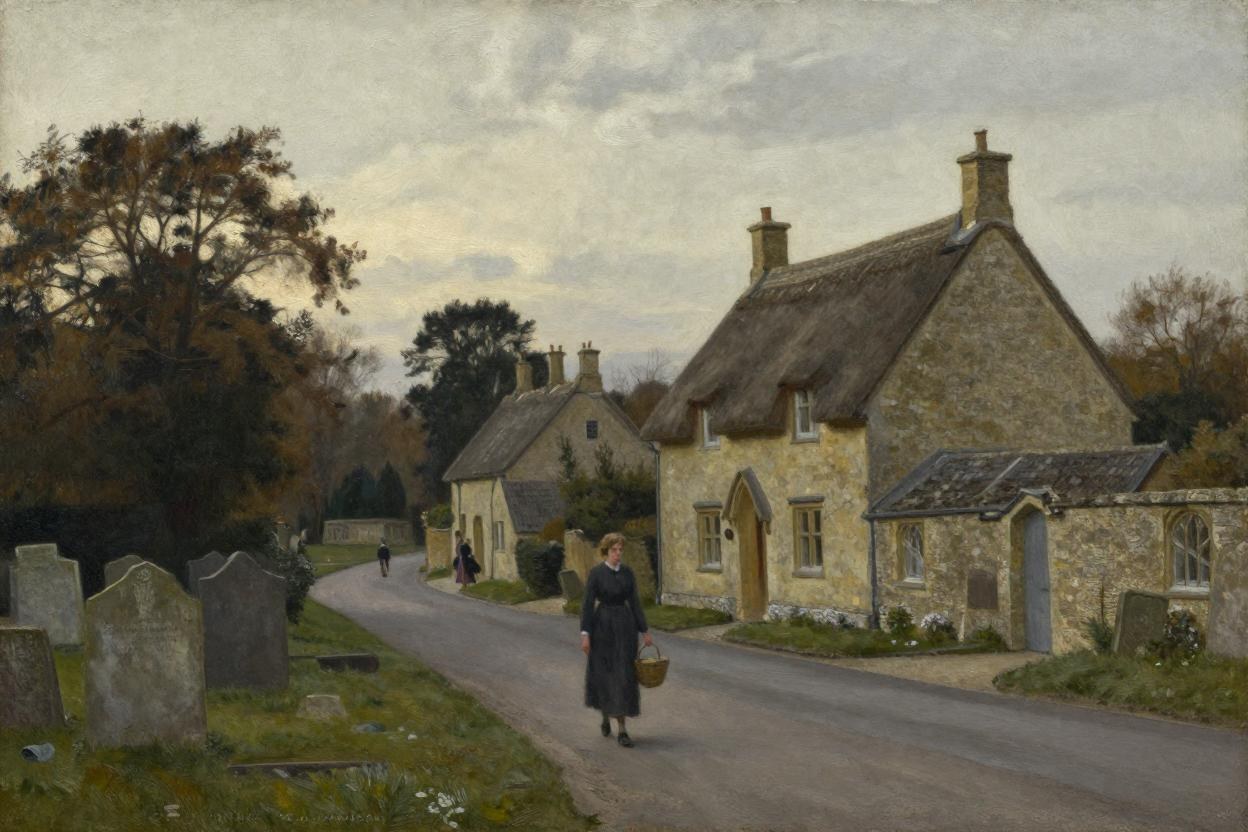
Virginia Woolf, writing in the Times Literary Supplement in 1919, called Middlemarch "the magnificent book which with all its imperfections is one of the few English novels written for grown-up people." The grown-up thing about it may be exactly this move. Eliot asks her reader to weigh an unrecorded life against a recorded one and to stop treating visibility as the sign of worth. She says it as plainly as prose can. The growing good of the world is "partly dependent on unhistoric acts," and the novel's last words follow: "and that things are not so ill with you and me as they might have been, is half owing to the number who lived faithfully a hidden life, and rest in unvisited tombs."
Read that sentence slowly, because it does something unusual. It addresses you directly and makes you a beneficiary of the unnoticed. Your circumstances are better than they might have been, and part of the credit belongs to people whose graves nobody visits. You profit every day from a crowd of the unrecorded, and you have almost certainly never thanked one of them, because you do not know their names.
Part V: Does a good life need anyone to notice it?
Eliot's answer is easy to state and hard to swallow. A good life does not need notice, and much of the good done in the world was done without it. The difficulty is that she concedes the whole cost in the same breath. Dorothea's nature spent itself in channels with no great name, and Lydgate, wanting the name, counted a comfortable and useful life as a failure. Eliot's refusal to call Dorothea a failure is convincing, yet the river image still carries a pang. Something was divided that might have run full and strong, and Eliot is honest enough to leave the pang in the sentence.
The other side deserves fairness too. The wish to be seen is old and human, and Eliot knew it. Her Saint Theresa set out as a child to seek martyrdom, the most public destiny a child could imagine. A child dreaming of a big channel wants a version of the same thing, a life the world cannot look away from. In one sense it is the supreme self asking to be fed. It is also, as Dorothea's story shows, the same energy that can later become useful. Ardor that starts as vanity can end as service, so the wish deserves neither contempt nor indulgence.
The hardest part of the book to accept is the comfort of its conclusion. If you do good and nobody records it, you have to take its value on trust, spread invisibly through people you will never meet. Lydgate could not do that, and many readers will find his response the more honest one. Eliot asks you to accept an account with no receipts, for your own life as well as for other people's. The novel earns the right to ask only because it has spent hundreds of pages showing Dorothea doing quiet good, scene after scene, with nobody watching.
The book will not talk a child out of wanting to be a YouTuber, and it does not try. What it can do is recalibrate an adult reader. After Middlemarch you start to notice how often you treat attention as proof of value, in other people's work and in your own, and you start to ask what you would still do if nobody were counting. One habit follows from the Finale. Keep a short private list, once a month, of the good you did that nobody saw, and beside it the good done for you by people you will never be able to thank. It reads very differently from the numbers on a screen.
Questions readers ask
What is Middlemarch about?
It follows several ardent people in a fictional Midlands town in the years before the Reform Act of 1832, chiefly Dorothea Brooke and the doctor Tertius Lydgate, who set out to do great things and end up living smaller versions of their plans. George Eliot, the pen name of Mary Ann Evans, published it in eight parts in 1871 and 1872.
Why does Dorothea marry Casaubon?
She is young and ardent and wants a life of serious purpose, and she believes helping the older scholar finish his great work, the Key to all Mythologies, will give her one. The work is never finished, and after his death a codicil to his will cuts her off if she marries Will Ladislaw. She marries Will anyway.
Is Middlemarch a difficult read?
It is long and starts slowly, with a whole town of characters to meet. The sentences are clear, though, and Eliot explains her people with patience and humour, so most readers find it easier once the main stories are under way.
What is the most famous quote from Middlemarch?
The last sentence of the novel, which says that "the growing good of the world is partly dependent on unhistoric acts," and owes much to the people who "lived faithfully a hidden life, and rest in unvisited tombs."
Further Reading
A Palace in TimeHeschel's Sabbath and the case for time set apart before the week fills it.