The Math You're Not Allowed to Do
Le Guin's Omelas is a utopia built on one child's suffering. Supply chains ask the same question and get away with it.
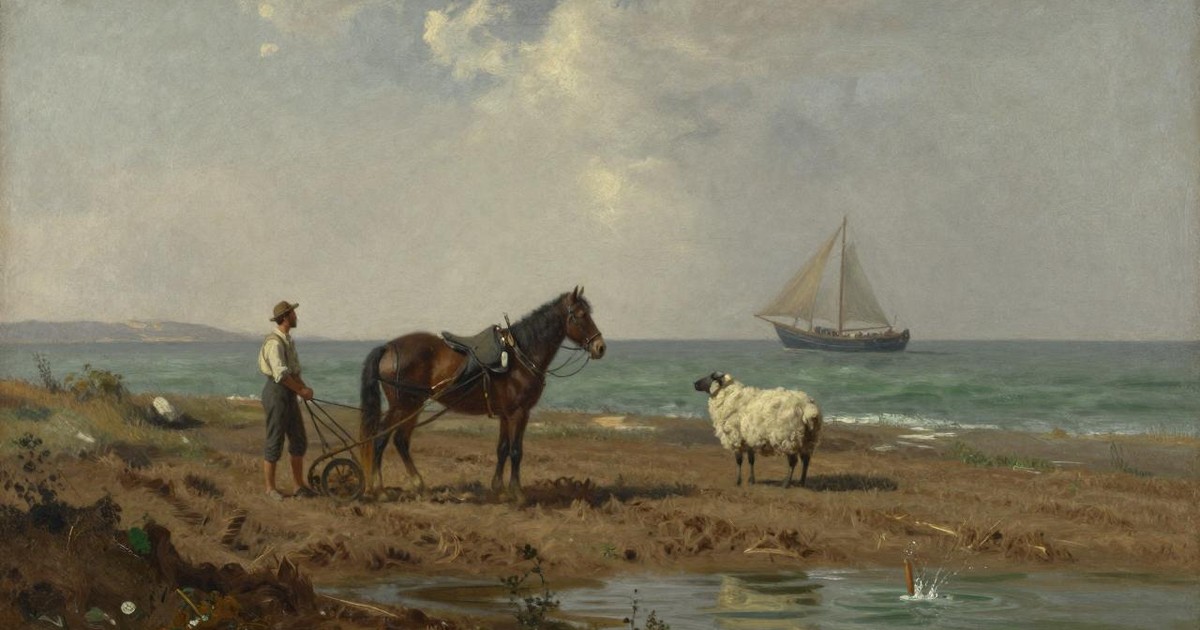
In 1973, Ursula K. Le Guin published a short story about a city called Omelas, and the story has been haunting ethics classrooms ever since. Its opening is deliberately seductive. A festival in summer: bells ringing, swallows soaring, a horse fair, children racing barefoot through the streets. The narrator, aware of your skepticism, invites you to add whatever the paradise is missing. Orgies, beer, drugs, a troupe of jugglers: add them yourself, the story says, because the point is not the furnishings. The point is that you do not believe in the happiness, and the narrator knows it, because you have been trained by a literature of misery to distrust any account of joy.
Then the story turns. In a basement under one of the beautiful public buildings, there is a child. It is described with care: stunted, feeble-minded, born normal, sitting in its own filth, fed half a bowl of cornmeal and grease a day. It has known nothing else. It is afraid of the mops. And every citizen of Omelas, sometime between the ages of eight and twelve, is taken to see it.
Those are the terms. The splendor and health and abundance of the city, the intelligence of its scholars, the skill of its musicians, the very kindness of its people, all of it depends, wholly and entirely, on the child's misery. If the child were brought up into the sunlight, Omelas would rot: all the prosperity and delight would wither and be destroyed. Those are the terms. The citizens learn them, and the great majority of them, after an initial sickness and rage and denial, come to accept them. They rationalize. The child is too degraded to benefit from freedom now. The terms are simply how the world works. And they go on living in their beautiful city, and their compassion, the story notes, is real, its scope enlarged by the immense unselfishness of what they permit to happen.
A few of them do not accept the terms. Adolescents and adults, silent and alone, who do not go home. They walk out of Omelas, through the beautiful gates, and keep walking. They walk into a darkness the narrator cannot describe, and the story does not say where they go. It ends there.
Le Guin kept a careful record of the story's ancestry. She credited William James, who imagined "millions kept permanently happy on the one simple condition that a certain lost soul on the far-off edge of things should lead a life of lonely torture," and Dostoevsky, whose Ivan Karamazov tells his brother that no harmony is worth the tears of one tortured child. The story is a thought experiment in that lineage, and its question looks at first glance like a test of character. Would you stay?
But read more carefully, because the story's sharpest trap is elsewhere. The narrator never claims you must choose. The narration conspires with the citizens' rationalizations, offering you, the reader, comfortable exits: maybe the child is beyond help, maybe the terms are just given, maybe walking away accomplishes nothing anyway. The story does not endorse these. It lets you reach for them, and watches you reach, and counts on the reaching. The real subject is not the child in the basement. It is the fluency of the excuses, ours, yours, arriving exactly on schedule.
Part II: Why the math is banned
Call it what it is: Omelas is an arithmetic problem, and the citizens are forbidden to do the math.
The equation is stated plainly. On one side, the welfare of an entire city: festivals, medicine, music, harvests, friendship. On the other side, one child's ruin. Any honest utilitarian calculator would total that instantly: the city wins by an astronomical margin, and the utilitarian who refuses to run the numbers on this one has not run out of arithmetic, they have run out of nerve. Bentham, who would have happily sanctioned the arrangement in principle, built a prison to make exactly this style of trade. The interesting thing is that almost nobody, meeting the story, actually does the calculation. The refusal is immediate, visceral, prior to argument. Whatever we think we believe about the greatest good of the greatest number, there is something in us that will not type the figures into this particular machine.
Philosophers have spent decades naming that something. Some argue the calculus fails because we have duties that do not aggregate: each person is an end, and the child cannot be netted against the city because the child is not a quantity. Some argue the calculation, done properly, includes an erosion term: a city that needs a tortured child in its foundation has already corrupted everything it touches, and the happiness on one side of the ledger is partly fake, propped up by a motive the citizens dare not look at. Notice that this second argument quietly dissolves the whole trade: the terms are not terms, they are a story the citizens tell, and the wonder of Omelas is how eager they are to believe it.
That is the mechanism worth carrying forward, because it survives the transfer out of fiction. Omelas is not a dilemma about a magic basement. It is a portrait of a society running a massive favorable balance on an account it refuses to itemize, held together not by the suffering itself but by the agreed etiquette of not looking too hard at how the balance is struck. The child exists. The benefits are real. The arithmetic connecting them is simple. And the whole arrangement is protected, not by locks, but by a taboo: the math you're not allowed to do.
Part III: The basement, planet-sized
Now walk through the gate of any prosperous city, in the present tense.
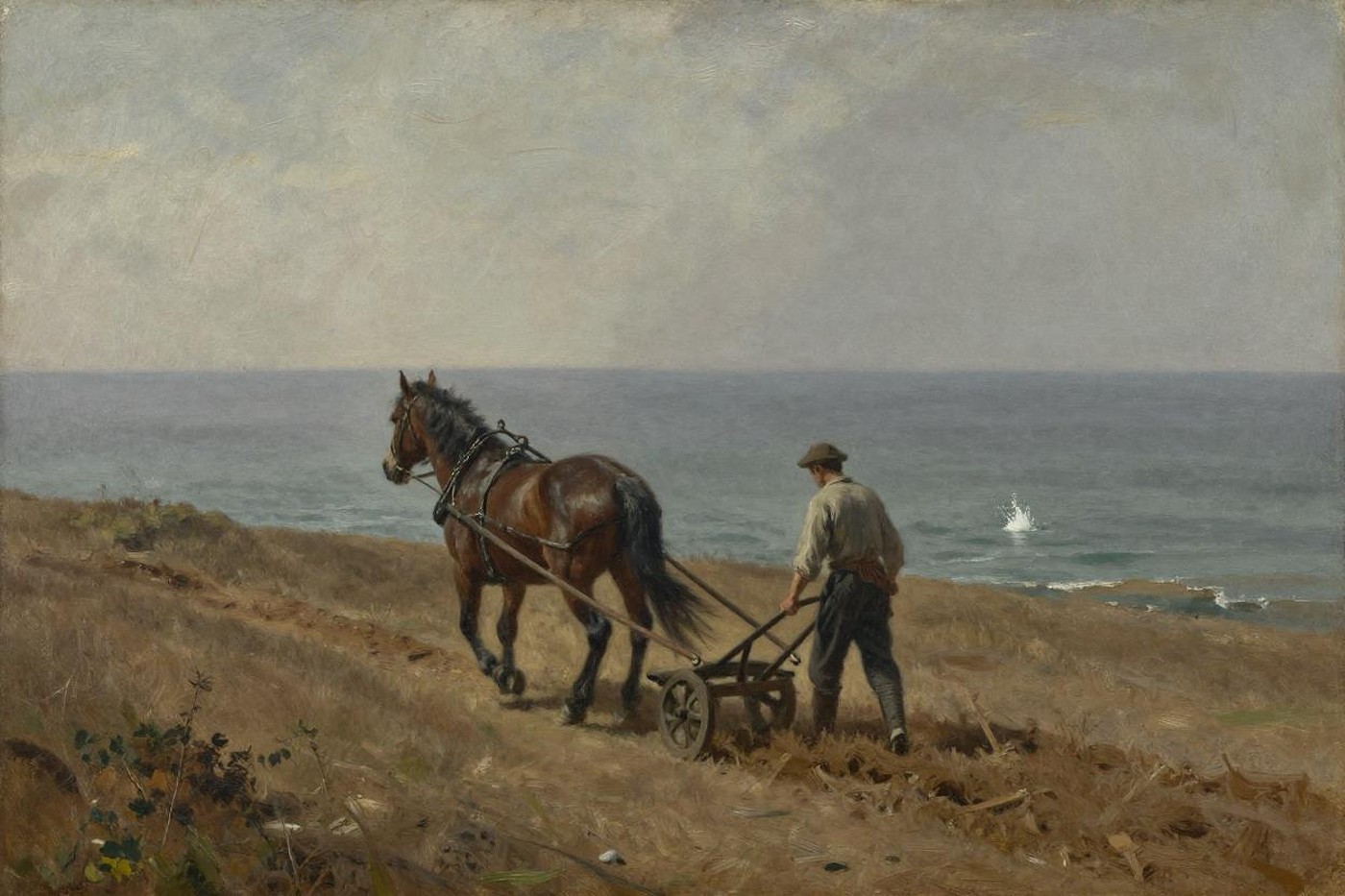
The phone in your pocket, new, slimmer and faster than last year's, holds a battery that wants cobalt, and most of the world's cobalt comes from mines where the digging is done in large part by hand, in unsafe tunnels, by people who include children. The shirt on your back was likely sewn in a facility where workers endure the kind of hours and conditions that your labor laws abolished in your own country a century ago, occasionally collapsing on them, as a building full of garment workers did in Bangladesh in 2013, killing more than a thousand people who made clothes for brands everyone recognizes. The shrimp, the chocolate, the fast fashion, the rare earths, the melamine of a thousand supply chains: pick any cheap, excellent good and trace it backward, and somewhere at the far end of the chain the odds are respectable that you will find a worker paid less than a living wage, in conditions your own jurisdiction forbids, or worse.
These facts are not hidden. That is the first thing that must be said with emphasis. They are in NGO reports, in investigative journalism, in corporate transparency disclosures, in the terms and conditions of the world. Nothing about our Omelas requires a secret basement or an initiation ceremony at age twelve. The initiation is a smartphone commercial.
Apply the Omelas audit to this arrangement, component by component. The benefits: yes, genuinely vast. The global trading system, for all its brutality, is plausibly the single largest poverty-reduction machine in human history, and the people inside the basement, given the actual choices available to them, often choose the mine and the factory over the village and the field, because the alternative is worse. The suffering: also real, measurable, and attached to specific, nameable people, most of them children at the time the story begins, most of them never emerging. The arithmetic connecting them: simple, quotidian, a sentence long. Your purchase is cheaper because someone's wage was lower and their safety was expendable. Everyone knows the sentence. Almost nobody totals it.
And the taboo operates exactly as Le Guin drew it. The rationalizations arrive pre-installed. The system is too big to opt out of, so abstaining is pointless theater. Economic development requires an ugly phase; there but for fortune, our own grandparents endured the same. Consumers cannot be expected to research every purchase; the moral work belongs to governments, and the governments belong, in various senses, to the interests. All of these contain some truth, and their function is identical to the citizens' rationalizations about the child: they are not conclusions. They are anesthetics. They are the terms, restated in a soothing register, by people who benefit from not doing the math, which is us, which is the point of the story being in your hands at all.
Part IV: The walking away, examined
The counter-readings deserve their full weight, and the first one is formidable.
The strongest objection to the whole framework is that the trade is not actually Omelas-shaped. The citizens of Omelas faced a genuine bargain: the child's suffering and nothing else would suffice, by stipulation. Our economy makes no such stipulation. Mining can be mechanized, factories can be inspected, wages can rise, and have, region by region, decade by decade, without collapsing the splendor, or at least not obviously at the cost of it. The child in our basement is not load-bearing by cosmic decree. The bargain is a policy choice wrapped in the language of inevitability, and accepting the inevitability is itself the ethical failure, the moment of surrender dressed as realism. On this reading, the correct response to the story is not to walk away. It is to tear up the terms and renegotiate, and the people who benefit most from you believing the terms are fixed are the people who wrote them down.
The second objection is aimed at the walkers. Walking away from Omelas helps no one but the walker's conscience. It is, if anything, the more selfish act: a pure moral gesture, purchased at the price of abandoning the child to the same basement with one fewer witness. Translated: ethical consumption, boycotts, the buying of certified goods, are first-person solutions to a structural problem, and the only outcome of most of them is the walker's cleanliness. The child keeps starving, the city keeps glowing, and the walker keeps their receipts.
Both objections are good, and both are, in a sense, anticipated inside the story, which refuses to tell us where the walkers go. That refusal has always been the story's cruelest mercy. The walking is depicted, not the destination, because the destination, in every generation that reads it, is a different wager: that enough people declining to accept the terms might, in aggregate, unsettle them; that the city's serenity is thinner than it looks; that the arithmetic being refused so fluently by millions of comfortable people is exactly the arithmetic that could not survive being done aloud, together, at the same time, more than once. That the child is not, after all, load-bearing, and the foundation of the city is the story about the child.
So the question this essay hands you, the one it declines to settle, is not whether you would leave Omelas. The story was never really asking that. It is whether, tonight, in a prosperity built on terms you did not write and cannot recite from memory but could look up in an hour, you will do the math. Just once, out loud. Itemize the balance sheet the way the citizens never had to, because in their city the terms were posted in a single basement, and in ours they are distributed across the surface of the planet, diffuse as weather, itemized nowhere, and everybody knows, and everybody knows that everybody knows.
Some of them, in the story, do the arithmetic anyway, alone and quietly, and leave. Most stay, in a beautiful city, and are kind to their neighbors, and do not do the math they're not allowed to do, and are, in every other respect that anyone can see, happy.
Related topic: Ethics.
Further Reading
The Cage You’d Choose
La Boétie on voluntary servitude, and the cage that advertises itself as liberation.
La Boétie on voluntary servitude, and the cage that advertises itself as liberation.