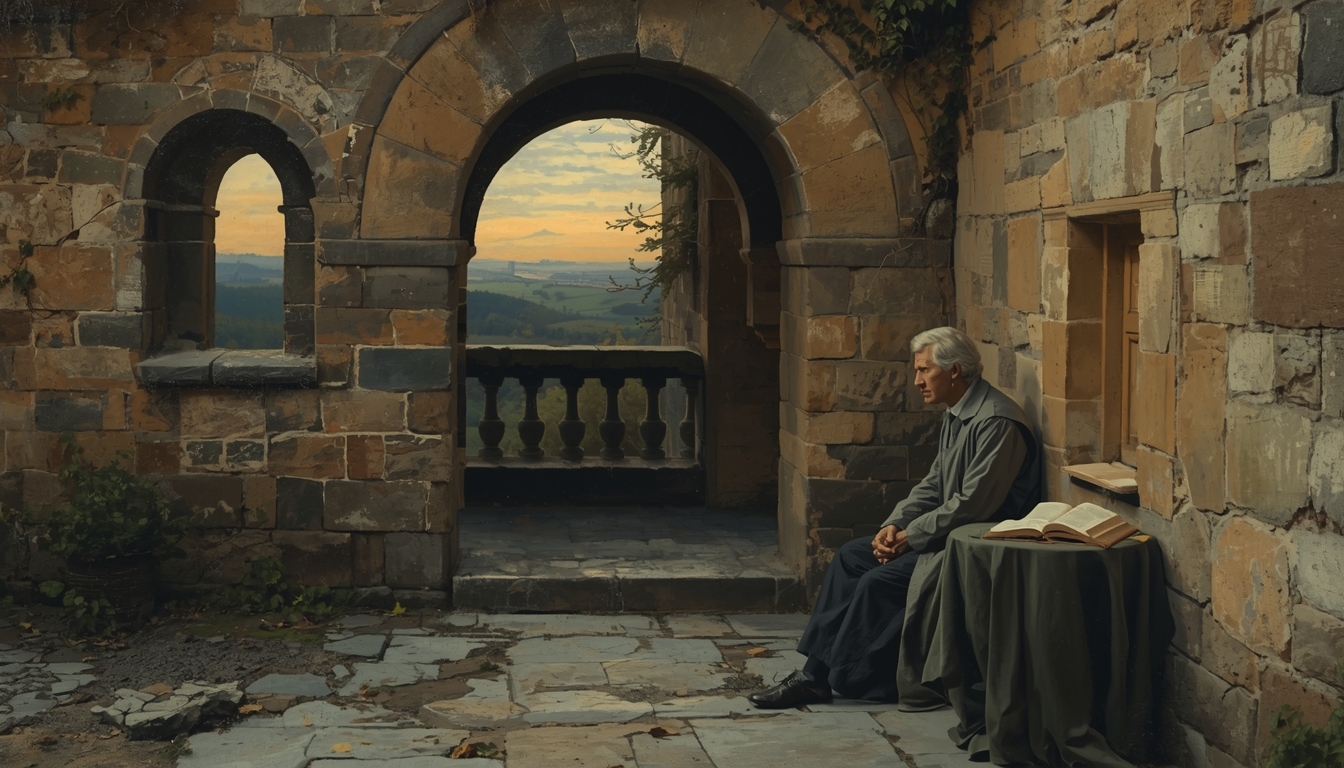
Introduction
Socrates did not write anything down. Everything we know about him comes through other people, mostly Plato, and there is a long-standing argument about where Socrates ends and Plato begins. This is fitting. The man who spent his life asking questions left behind a body of work that is itself a question: what did he actually think?
What we do know is what he did. He walked around Athens asking people to explain themselves. Not provocatively, or at least not intentionally. He seems to have been genuinely curious about whether the things people claimed to believe could survive examination. Whether the politician who spoke fluently about justice could define it under questioning. Whether the craftsman who was skilled at his trade had wisdom that extended beyond it. He was testing something, and the thing he kept testing was the gap between the life people were living and the life they had thought about.
The famous line from his trial is usually read as a statement about the importance of philosophy. But it is also something more specific. It is a statement about the relationship between thinking and living, the claim that a life not regularly examined is not fully a life at all. Not because examination produces correct answers, but because the act of asking is itself how a person stays honest with themselves.
I. What Examination Actually Meant
Socrates was not asking people to think more. He was asking them to notice what they were already assuming. The politicians he questioned were not unintelligent. The poets were not inarticulate. The skilled workers were not careless. What they shared was a kind of confidence that had not been tested, a sense that their expertise in one domain had given them understanding in all domains.
The Socratic method, as it is now called, is essentially a practice of pressure-testing. You take a claim someone holds confidently and you follow it. You ask what it implies. You ask whether it holds in edge cases. You ask whether the person would accept the same logic if it were applied to a conclusion they did not want to reach. Most of the time, something gives. The confident claim turns out to rest on assumptions that the person had not noticed they were making.
This was not comfortable for the people being questioned. Socrates was tried and executed at the age of seventy, convicted of corrupting the youth of Athens and impiety toward the gods. Whatever the political motivations behind the trial, the charge had a real basis. He was making people uncomfortable. He was showing them the gap between what they believed and what they could defend. And that gap, once seen, is difficult to ignore.
The examined life, in this sense, is not a pleasant project. It is a practice of sitting with the discomfort of not knowing, of holding questions open rather than closing them prematurely with answers that feel satisfying but have not been tested.
II. The Question That Does Not Close
What makes the Socratic legacy strange is that it does not point toward resolution. Other philosophical traditions offer practices, methods, ways of living that promise, if followed correctly, to settle the important questions. Socrates does not offer this. His dialogues mostly end without conclusions. The participants in the conversation have been shown that they do not know what they thought they knew. That is where it stops.
This has frustrated readers for two thousand years. Surely the point of examining a question is to answer it. Surely the purpose of all this inquiry is to arrive somewhere. But there is another way to read the open endings. The question that does not close is not a failure of inquiry. It is an invitation to keep going.
How should I live? is not a question with a final answer. It is a question you carry. The examined life is not a destination. It is a posture toward your own experience, a willingness to keep asking whether what you are doing reflects what you actually believe, and whether what you believe has survived honest scrutiny. Socrates kept asking until the day he died. He seems to have thought this was the point.
Closing Reflection
The Apology ends with Socrates accepting his death sentence without bitterness. He had been offered the chance to escape Athens and declined. He was seventy years old, he noted, and had spent his life doing the one thing he believed was worth doing. To stop now, simply to preserve a few more years, would be to abandon the only life he had found worth living.
There is something clarifying about that. The unfinished question is not a burden to be resolved before living can begin. It is what living is, for those who take it seriously. The willingness to examine, to sit with uncertainty, to return again and again to the questions that do not resolve, is not a preliminary to a good life. It is a good life, in practice, one question at a time.